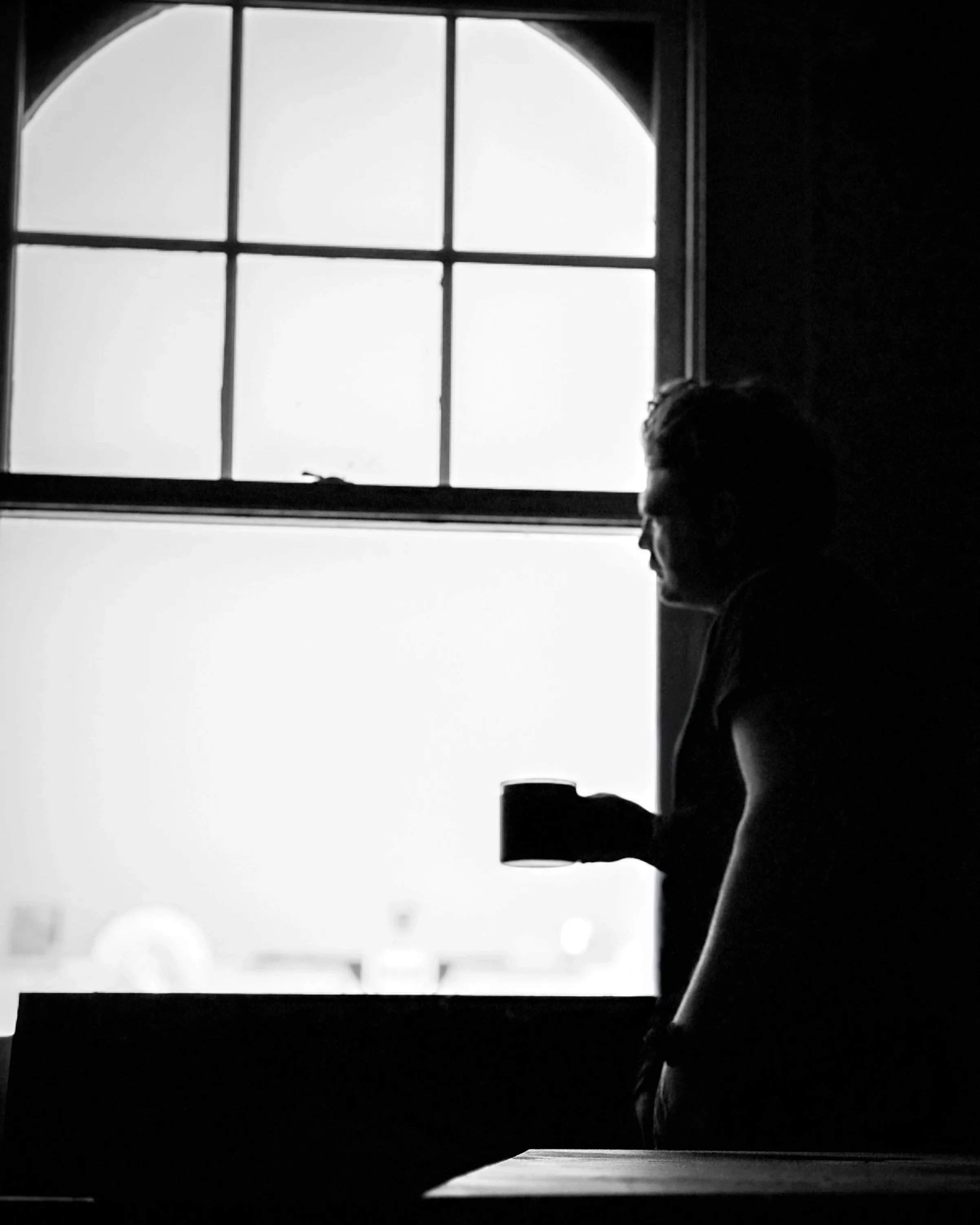
ABOUT
Living in the Midwest.
Drawing from the Maine coast.
David “Butch” Buetsche is a contemporary mixed-media artist and founder of Coastal Ruinism, a developing framework for examining erosion, infrastructure, and the material evidence left by human intervention. Based in the Midwest, Buetsche draws from years of travel and research along the New England coast, where working harbors, weathered structures, maritime objects, and changing shorelines become records of labor, use, loss, and environmental change.
Working across painting, collage, assemblage, and sculpture, Buetsche combines traditional media with found and altered materials including rope, wood, metal, maps, and remnants of maritime infrastructure. Rather than treating landscape as scenery, his work approaches it as an archive, a place where materials carry evidence of what has been built, used, abandoned, weathered, and transformed.
His work has been exhibited nationally and recently recognized through exhibitions and programs at the Daum Museum of Contemporary Art, Artists Archives of the Western Reserve, Center for Contemporary Arts National, South Haven Center for the Arts, and Create! Magazine.
Recent Recognition
Featured by Create! Magazine as part of the Time Capsule exhibition, curated by Alicia Puig of PxP Contemporary.
Read the artist feature →
Objects such as rope, buoy fragments, and industrial remnants are not added as symbols, but embedded as extensions of the same system—existing between image and material.
Core Practice
Buetsche’s work operates within a defined system:
horizons that shift or fail
signals that appear, degrade, or disappear
structures that resist collapse, but never fully hold
Surfaces are built through layering, abrasion, and removal—allowing forms to emerge and recede simultaneously.
Conceptual Frame
Rather than depicting landscape, the work reconstructs it through memory and disruption.
Coastal Ruinism is not about location—it is about condition:
Erosion over time
Failed navigation
Interrupted connection
Partial recognition
Each piece exists in tension between what is seen and what is lost.
Process + Materials
Works are developed through a combination of:
Archival and constructed imagery
Paint, graphite, and abrasion
Embedded materials and surface intervention
The process is iterative—built, broken, and reworked—
until the image resists full resolution.
Studio Notes
Occasional updates from the studio, including new work, exhibitions, and projects.
JOIN THE LIST