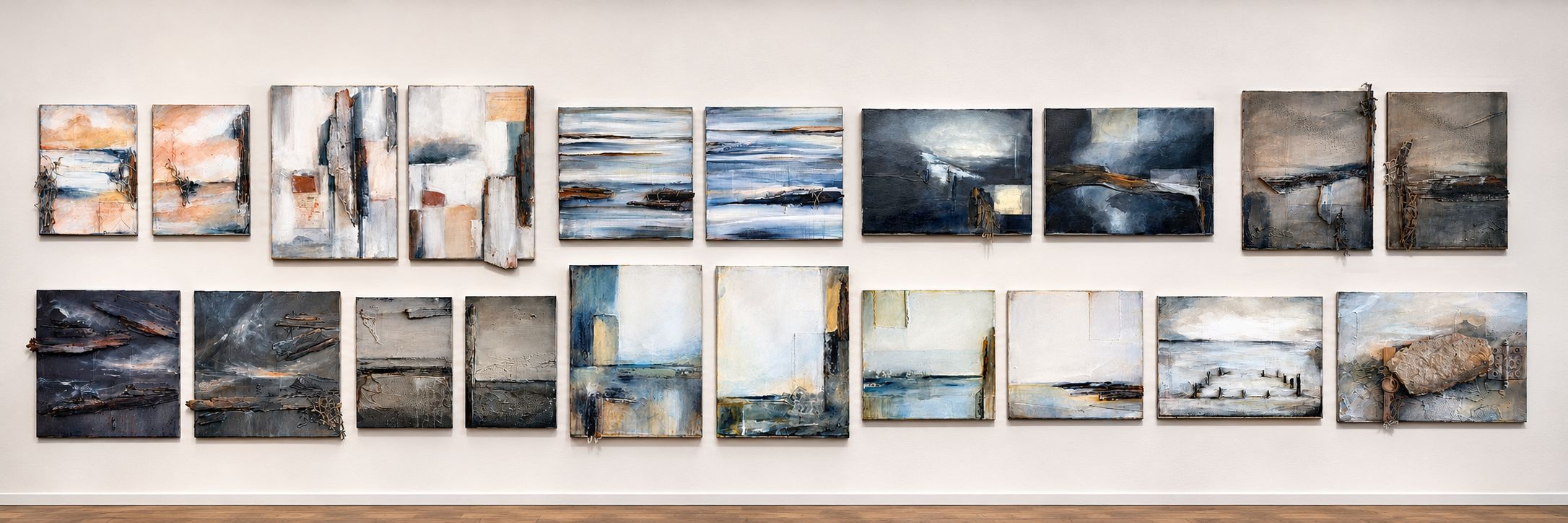
THE OUTERMOST HOUSE
20 Original Mixed-Media Works
A collection inspired by Henry Beston's The Outermost House
I created The Outermost House as a personal exploration of my connection to the coast and the ways in which a landscape holds memory. Henry Beston’s account of a year spent living on the outer shores of Cape Cod resonated deeply with my own fascination with the sea, solitude, impermanence and the physical traces left behind by time.
Through twenty original works organized into ten paired chapters, I wanted to translate the emotional and atmospheric journey of his writing into a visual and material experience. From the warmth and anticipation of Arrival, through the darkness of Storms and Winter, to the quiet reflection of Departure and After, the collection is as much about our relationship with place as it is about the landscape itself. Weathered wood, archival imagery, natural materials and layers of paint become evidence of what once was, what has changed and what remains.
THE SEA REMEMBERS EVERYTHING.
COLLECTING THE OUTERMOST HOUSE
Each work in this collection is an original, one-of-a-kind mixed-media artwork. The twenty works may be collected individually or as pairs, with prices ranging from $750 to $1,000.
CHAPTER 1: THE ARRIVAL
The beginning of Beston's journey inspired me to consider what it means to enter a landscape without fully understanding it, allowing observation to replace familiarity. These two works explore that initial encounter through open compositions, delicate materials, and the quiet anticipation of discovering a place.
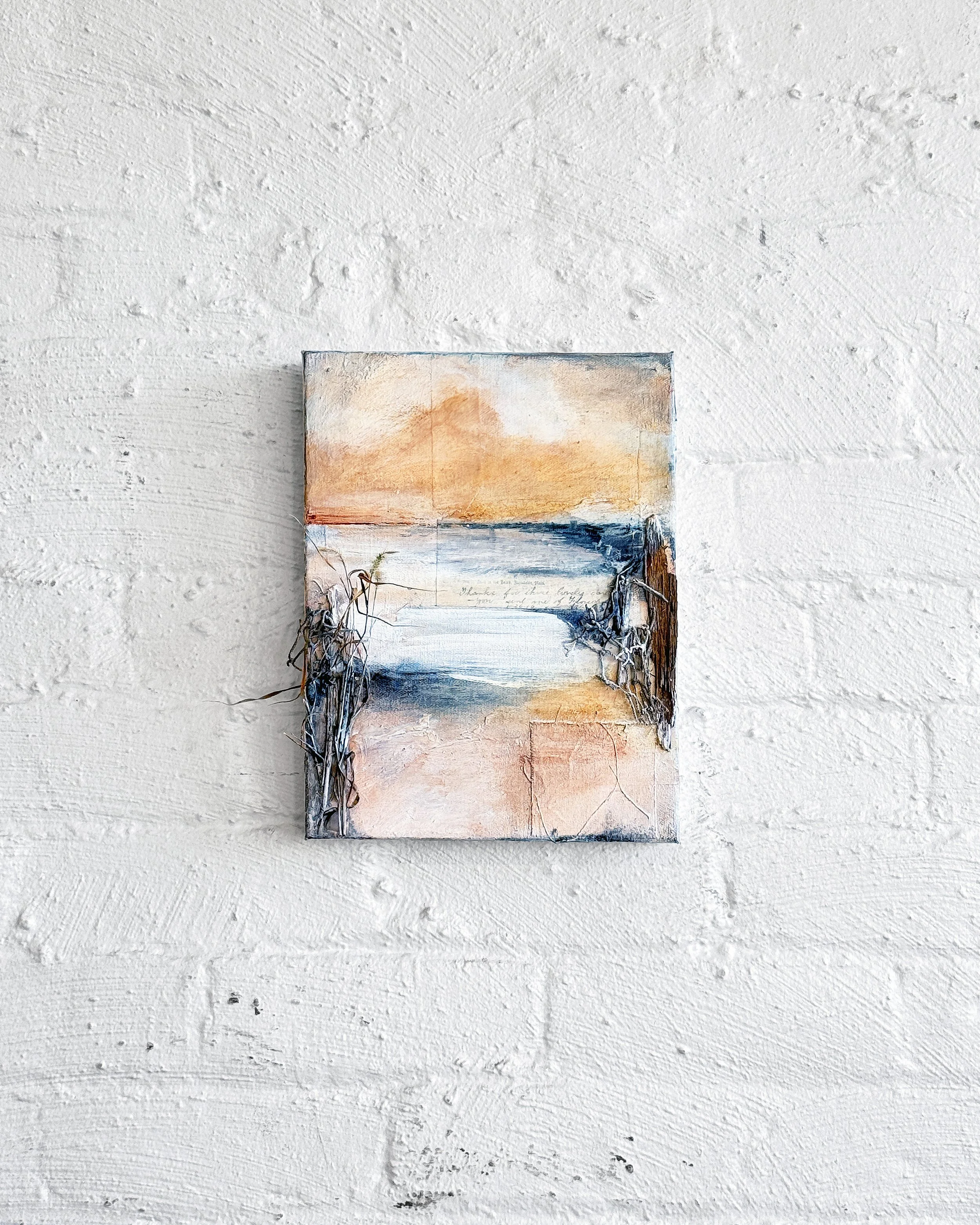
Arrival I | Acrylic, medium, collage, dried vegetation, and driftwood on stretched canvas | 12 H x 9 W x 2 D in. | $750
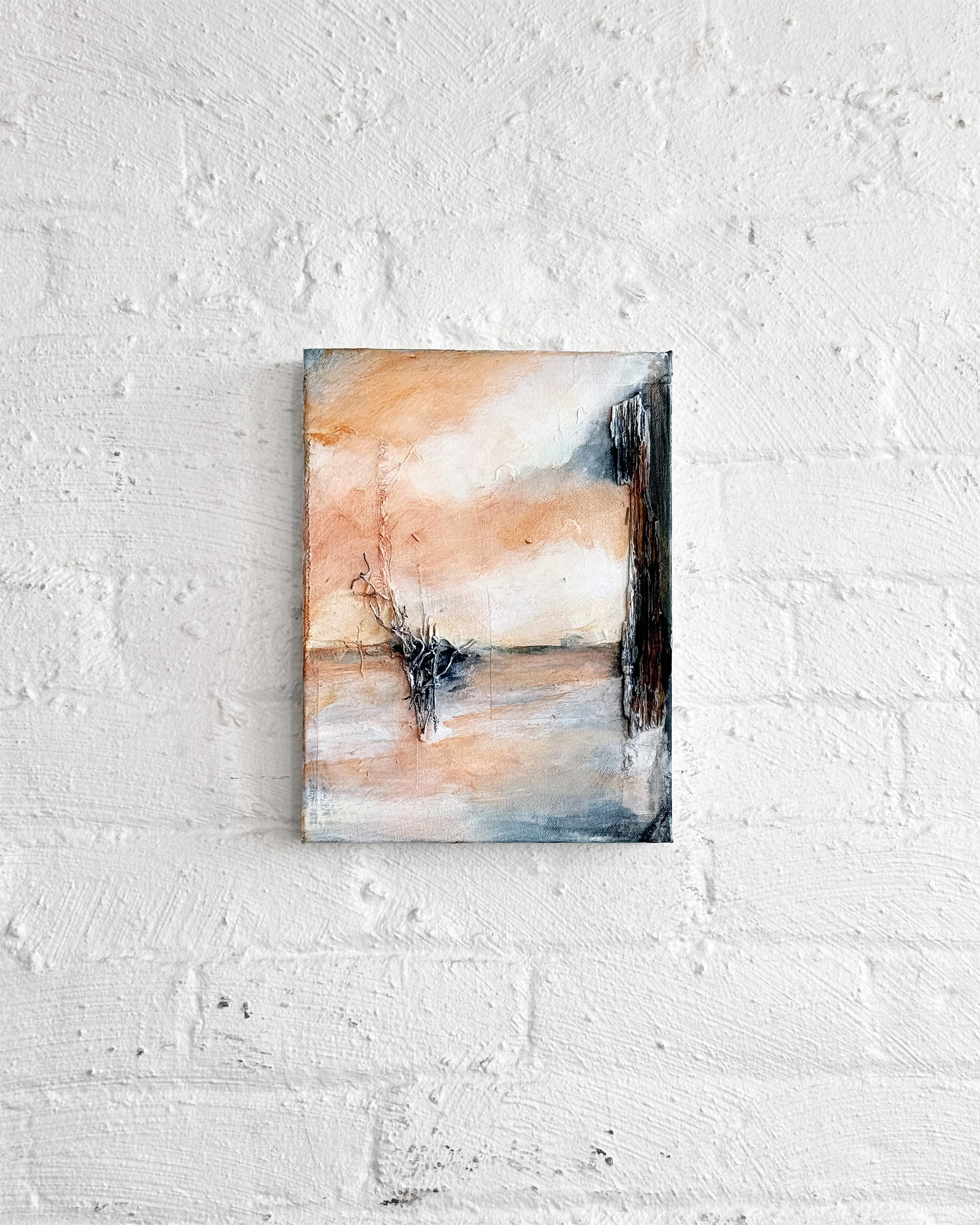
Arrival II | Acrylic, medium, collage, dried vegetation, and driftwood on stretched canvas | 12 H x 9 W x 2 D in. | $750
CHAPTER 2: THE HOUSE
Beston's small house that he built on the dunes, which he nicknamed “Fo’Castle”, became a point of connection between human presence and the surrounding wilderness. These works explore the fragile structures we create to establish a sense of belonging, using architectural fragments, weathered materials, and traces of habitation.
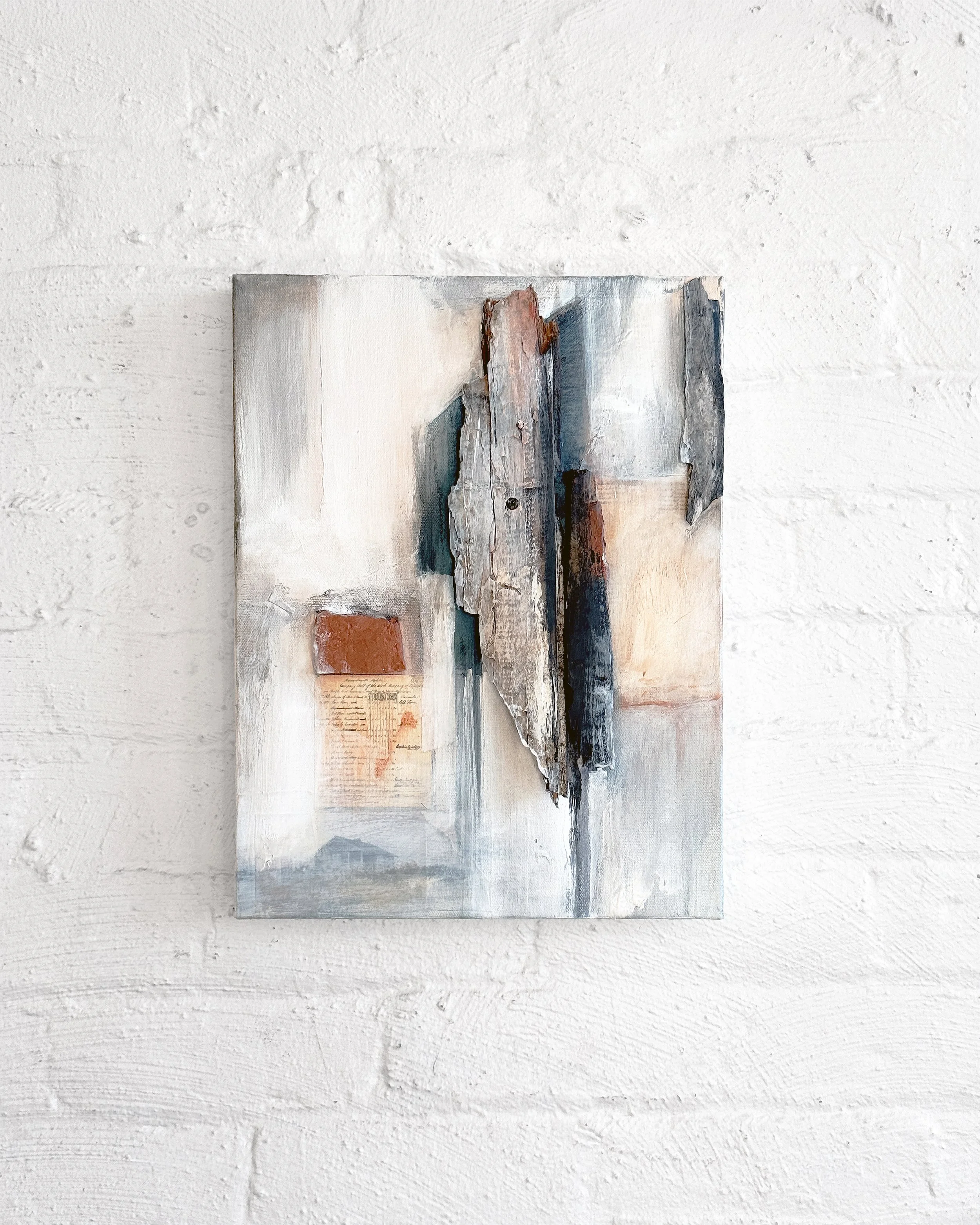
House I | Acrylic, medium, collage, brick, and driftwood on stretched canvas | 16 H x 12 W x 3 D in. | $900
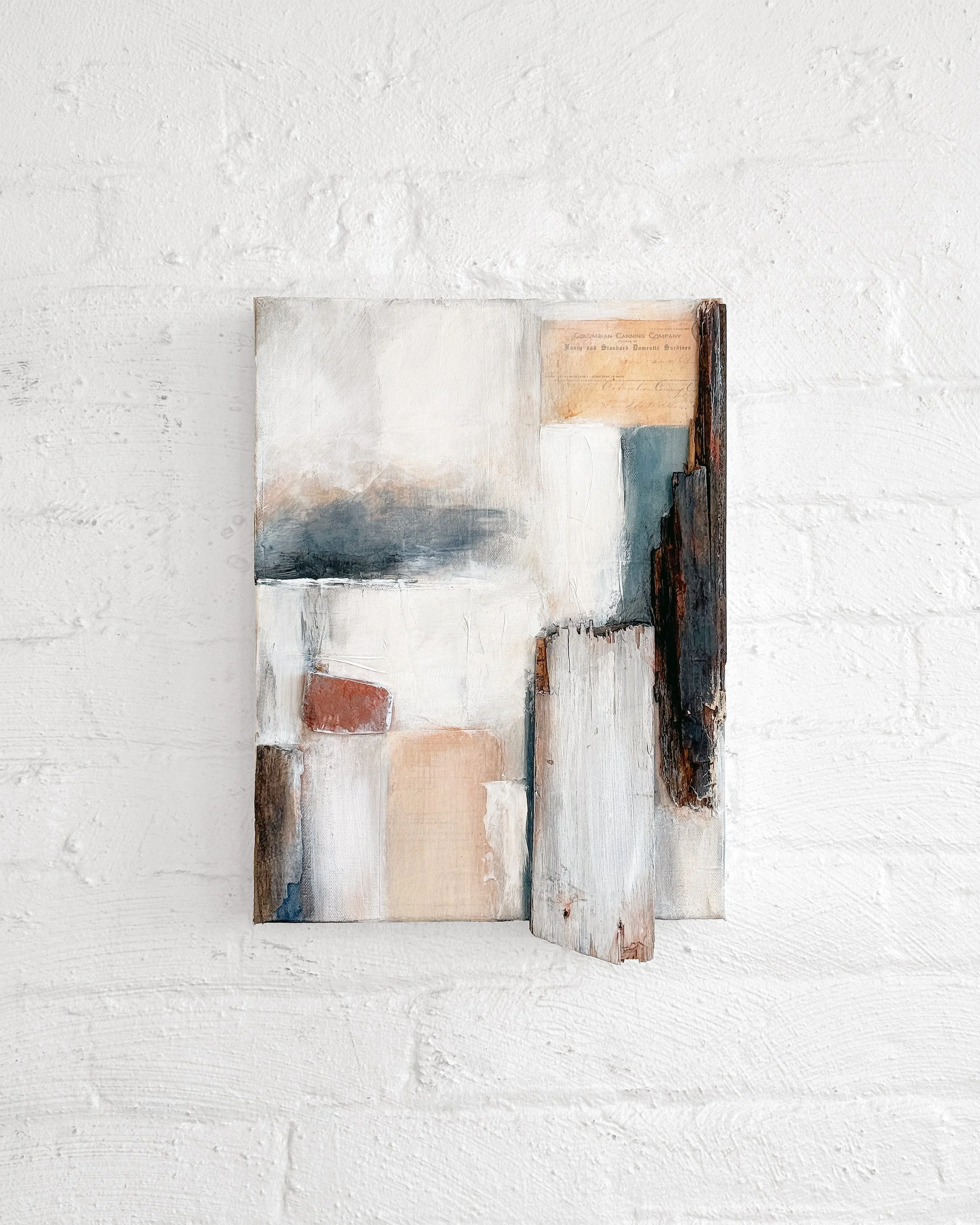
House II | Acrylic, medium, collage, brick, and driftwood on stretched canvas | 16 H x 12 W x 3 D in. | $900
CHAPTER 3: THE WIND
The constant presence of wind throughout Beston's observations inspired me to consider forces that shape a place without ever becoming fully visible. Horizontal movement, interrupted surfaces, and displaced materials suggest the gradual transformation of a landscape through erosion and exposure.
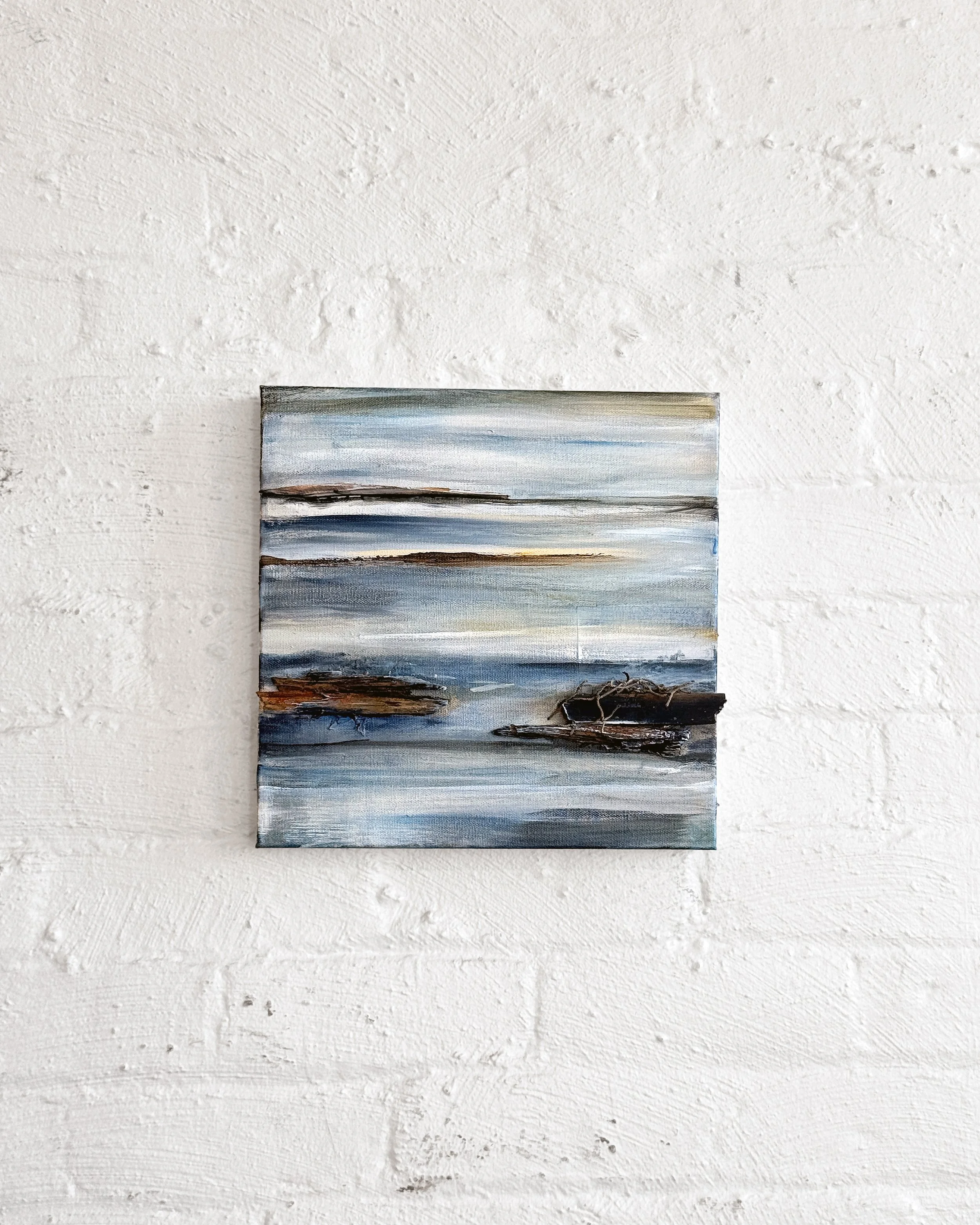
Wind I | Acrylic, medium, collage, fishing net, and driftwood on stretched canvas | 12 H x 12 W x 3 D in. | $800
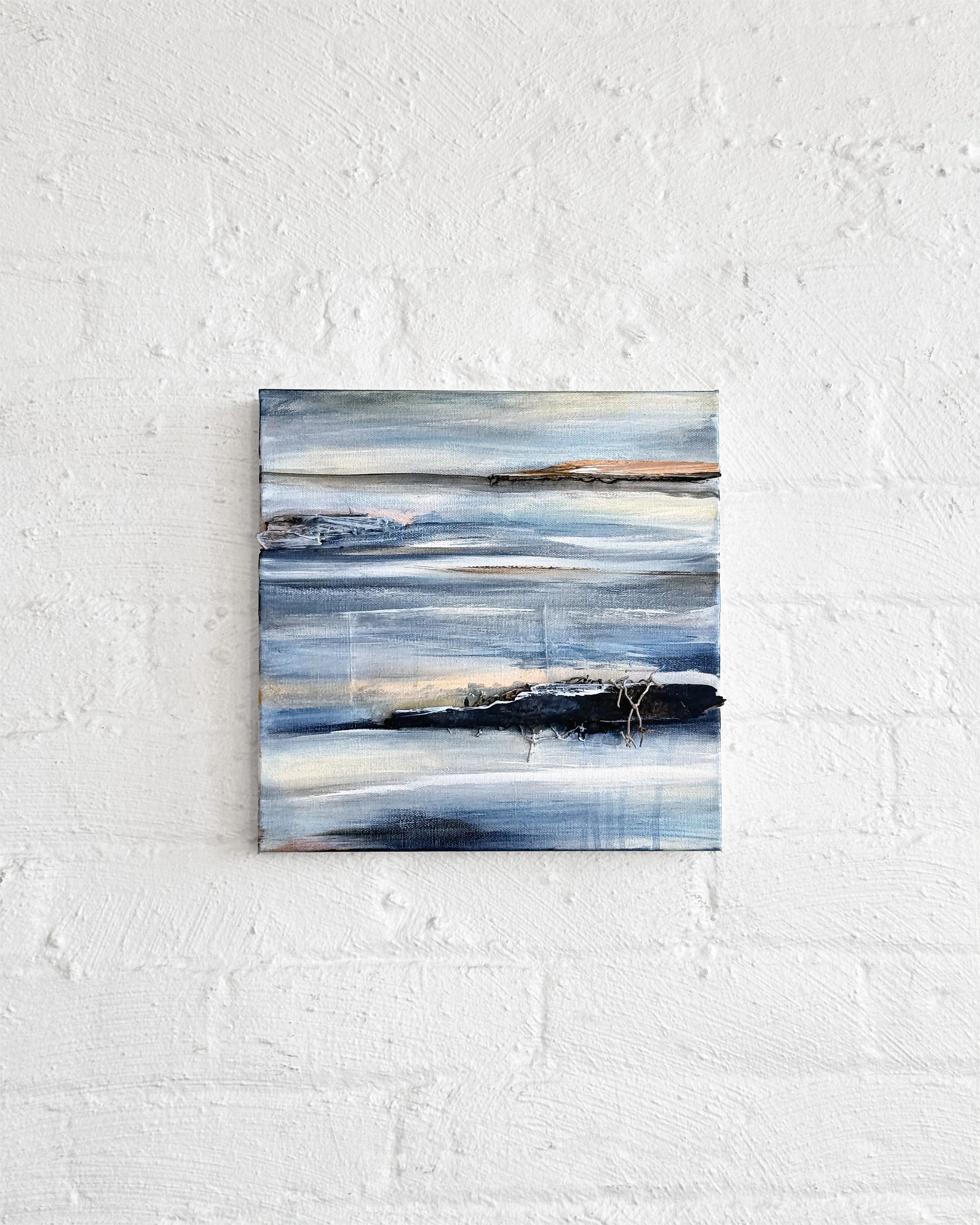
Wind II | Acrylic, medium, collage, fishing net, and driftwood on stretched canvas | 12 H x 12 W x 3 D in. | $800
CHAPTER 4: THE TIDES
Beston's descriptions of the ocean's changing rhythms led me to explore the relationship between what a landscape reveals and what it conceals. Submerged imagery, layered surfaces, and fragments of recovered material suggest the continuous exchange between presence and disappearance.
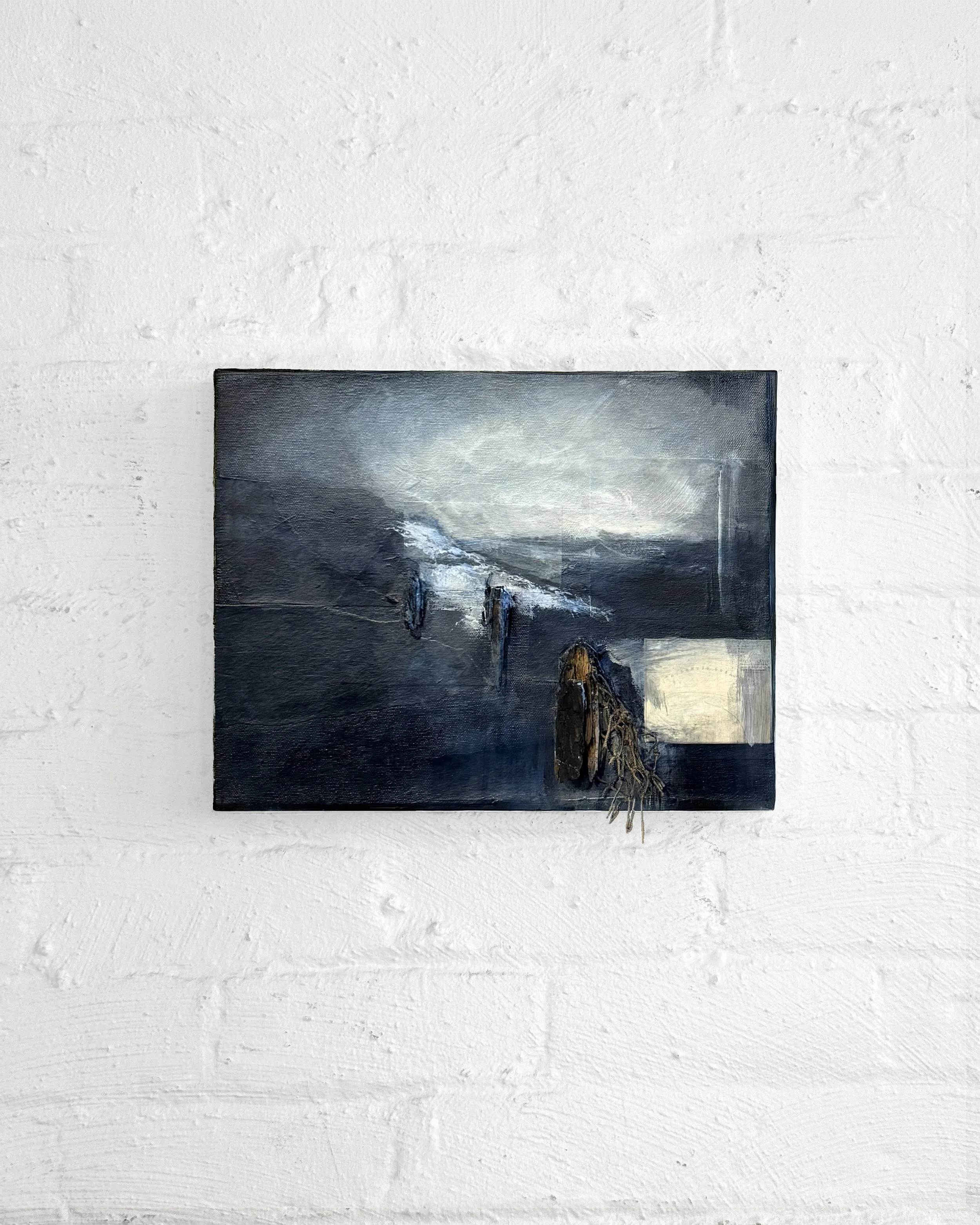
Tides I | Acrylic, medium, fishing net, collage, and driftwood on stretched canvas | 11 H x 14 W x 3 D in. | $850
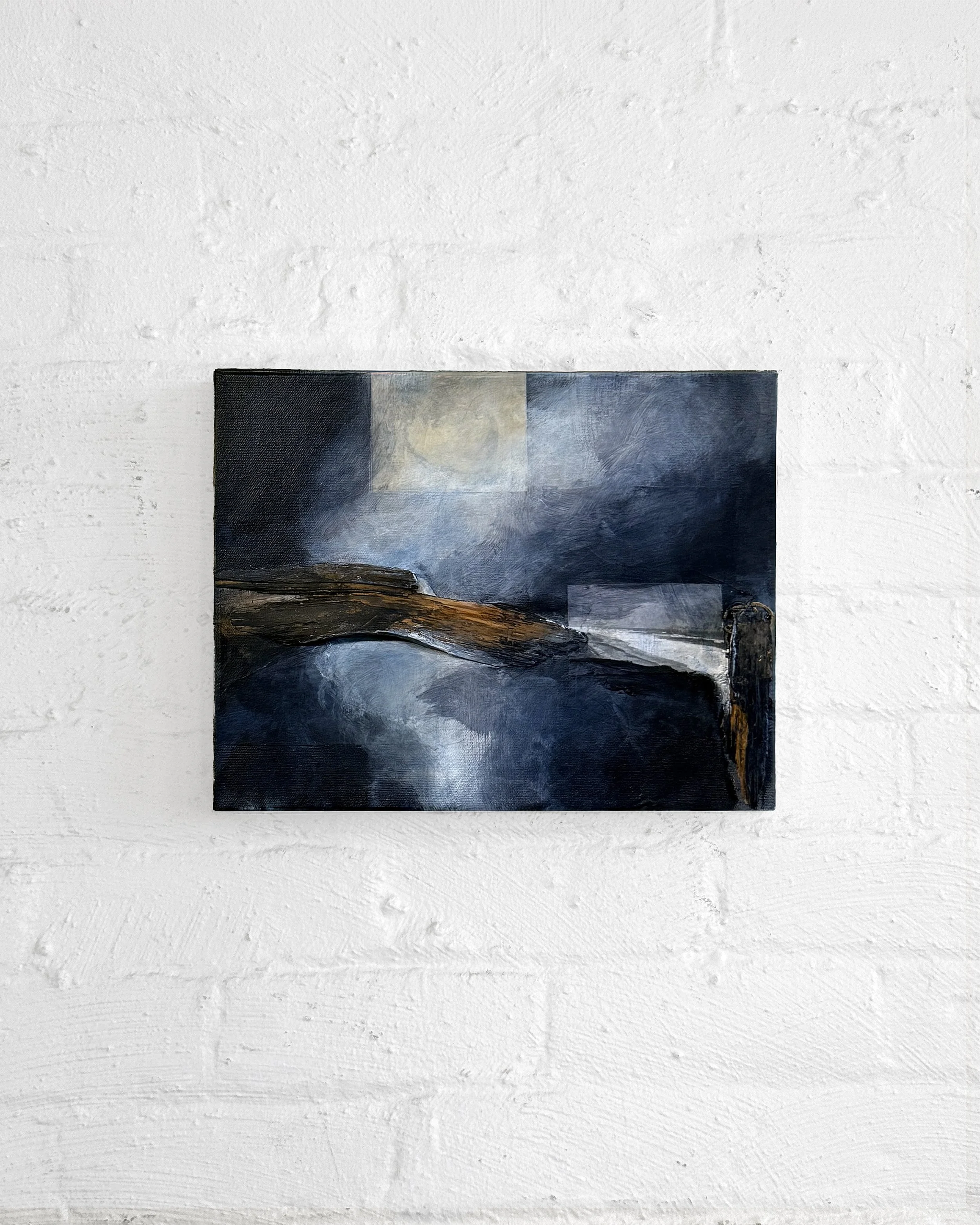
Tides II | Acrylic, medium, collage, fishing net, and driftwood on stretched canvas | 11 H x 14 W x 3 D in | $850
CHAPTER 5: THE BIRDS
The movements of birds along the coast inspired me to consider the patterns and rhythms that exist beyond human observation. These works use open space, delicate marks, and suggestions of murmuration to explore movement, migration, and the fleeting evidence of life passing through a landscape.
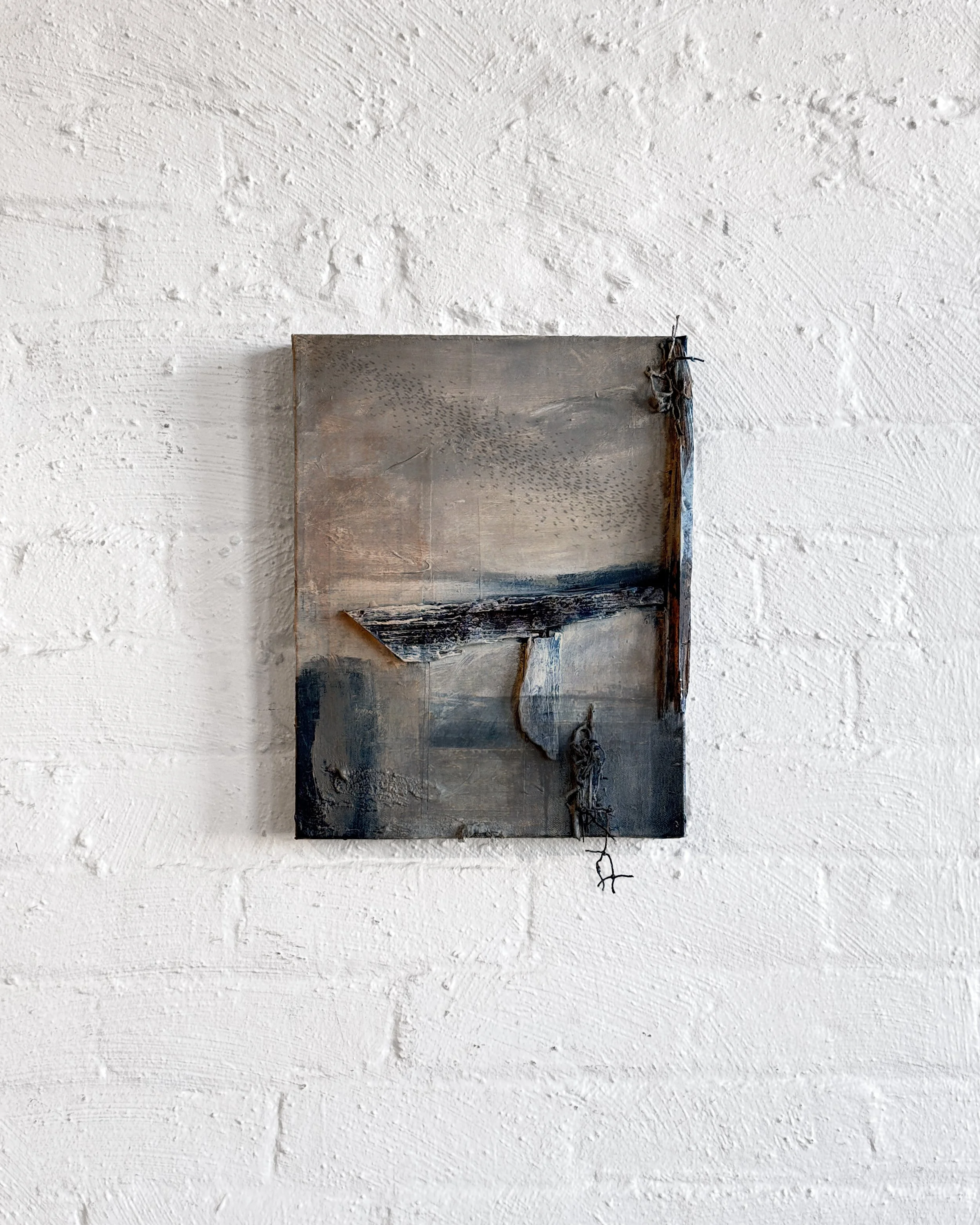
Birds I | Acrylic, medium, collage, fishing net and driftwood on stretched canvas | 14 H x 11 W x 3 D in. | $850
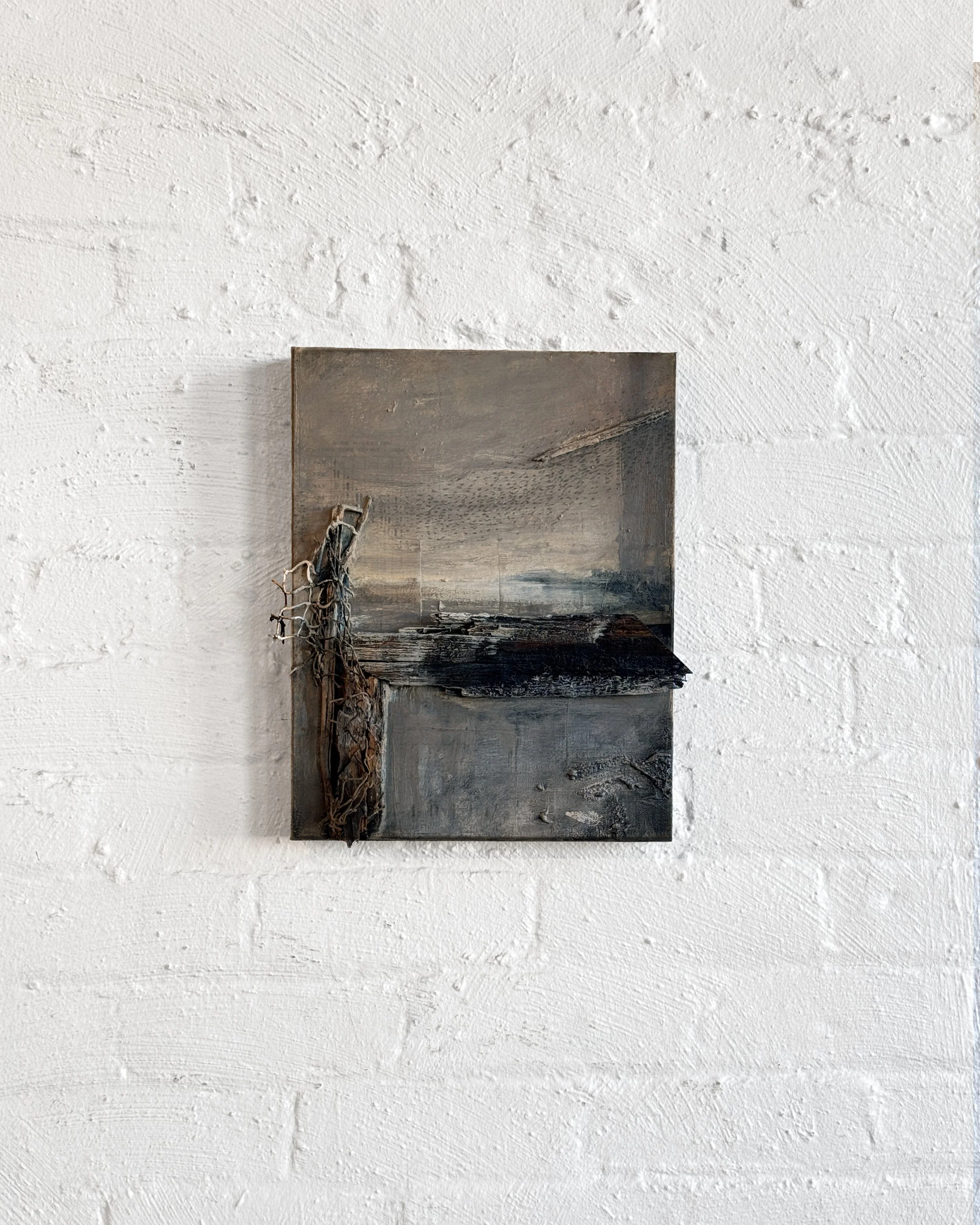
Birds II | Acrylic, medium, collage, fishing net and driftwood on stretched canvas | 14 H x 11 W x 3 D in. | $850
CHAPTER 6: THE STORMS
Beston's accounts of storms revealed the extraordinary physical forces that continually reshape the coast. These paintings respond through darker atmospheres, fractured materials, and increasingly physical surfaces, where the landscape appears caught between destruction and transformation.
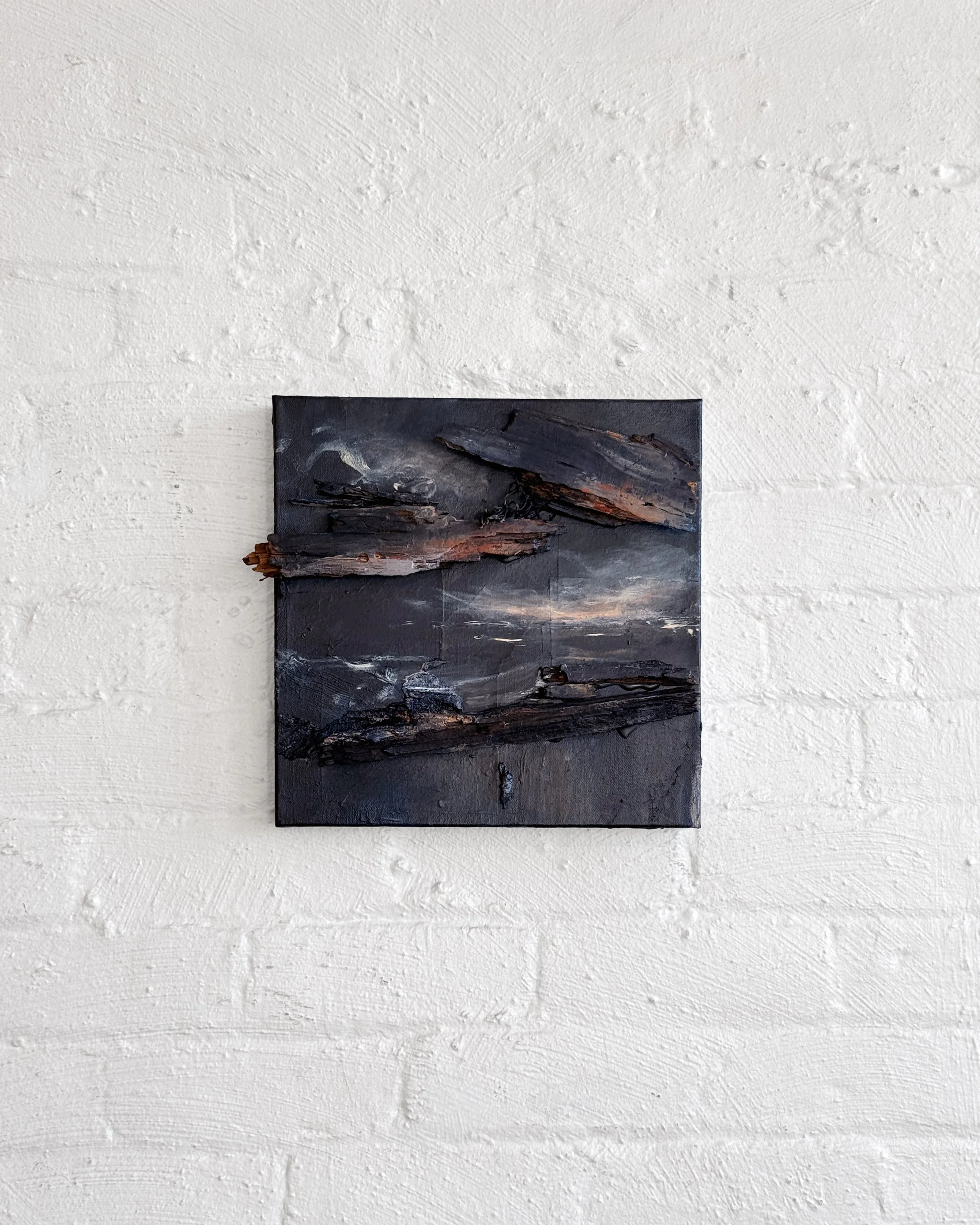
Storms I | Acrylic, medium, collage, fishing net and driftwood on stretched canvas | 12 H x 12 W x 3.5 D in. | $800
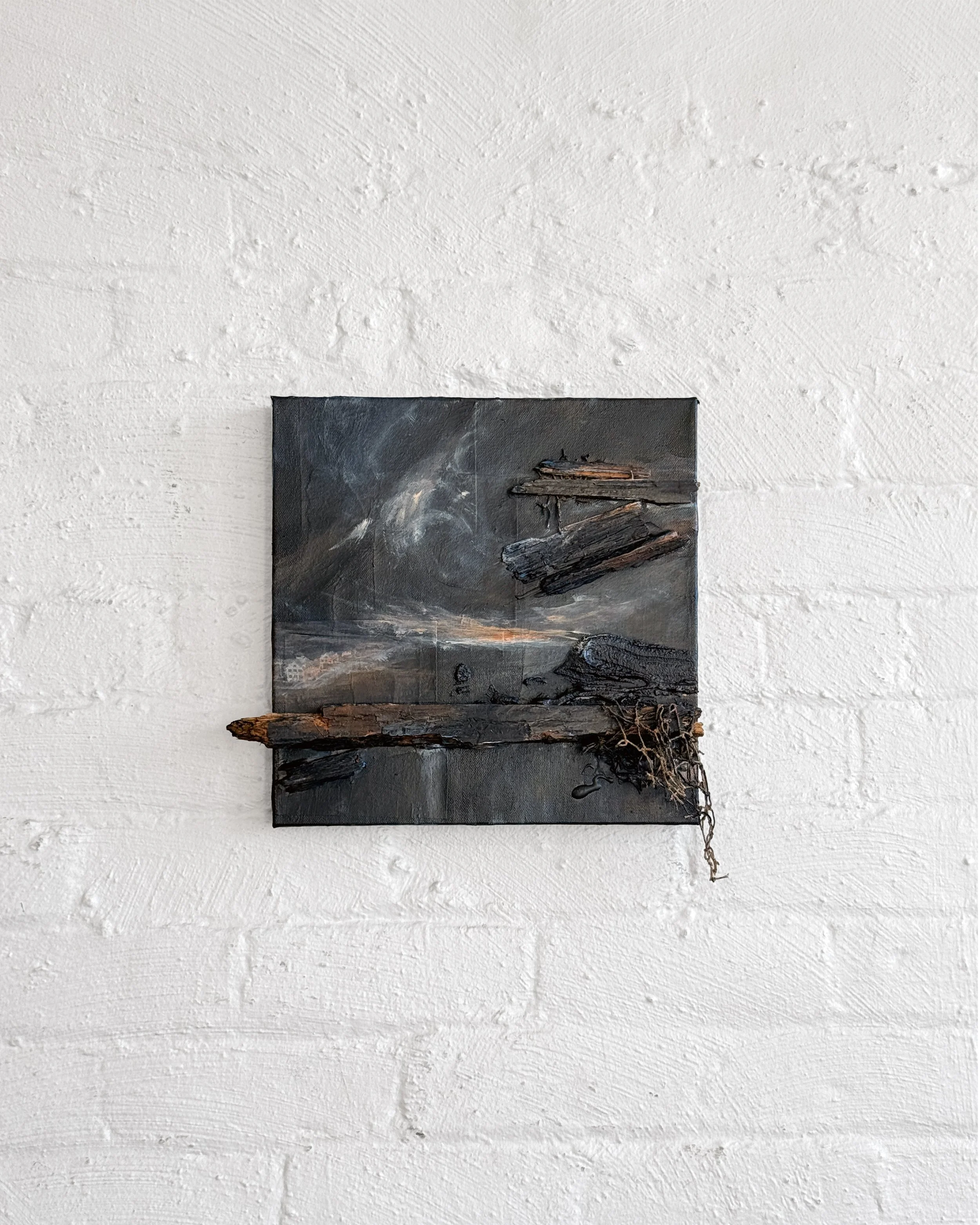
Storms II | Acrylic, medium, collage, fishing net and driftwood on stretched canvas | 12 H x 12 W x 3.5 D in. | $800
CHAPTER 7: THE WINTER
The stillness and isolation of winter inspired me to explore what remains when a landscape is stripped of its familiar details. Restrained color, nearly empty surfaces, and subtle material fragments create a sense of suspension, where absence becomes as significant as presence.
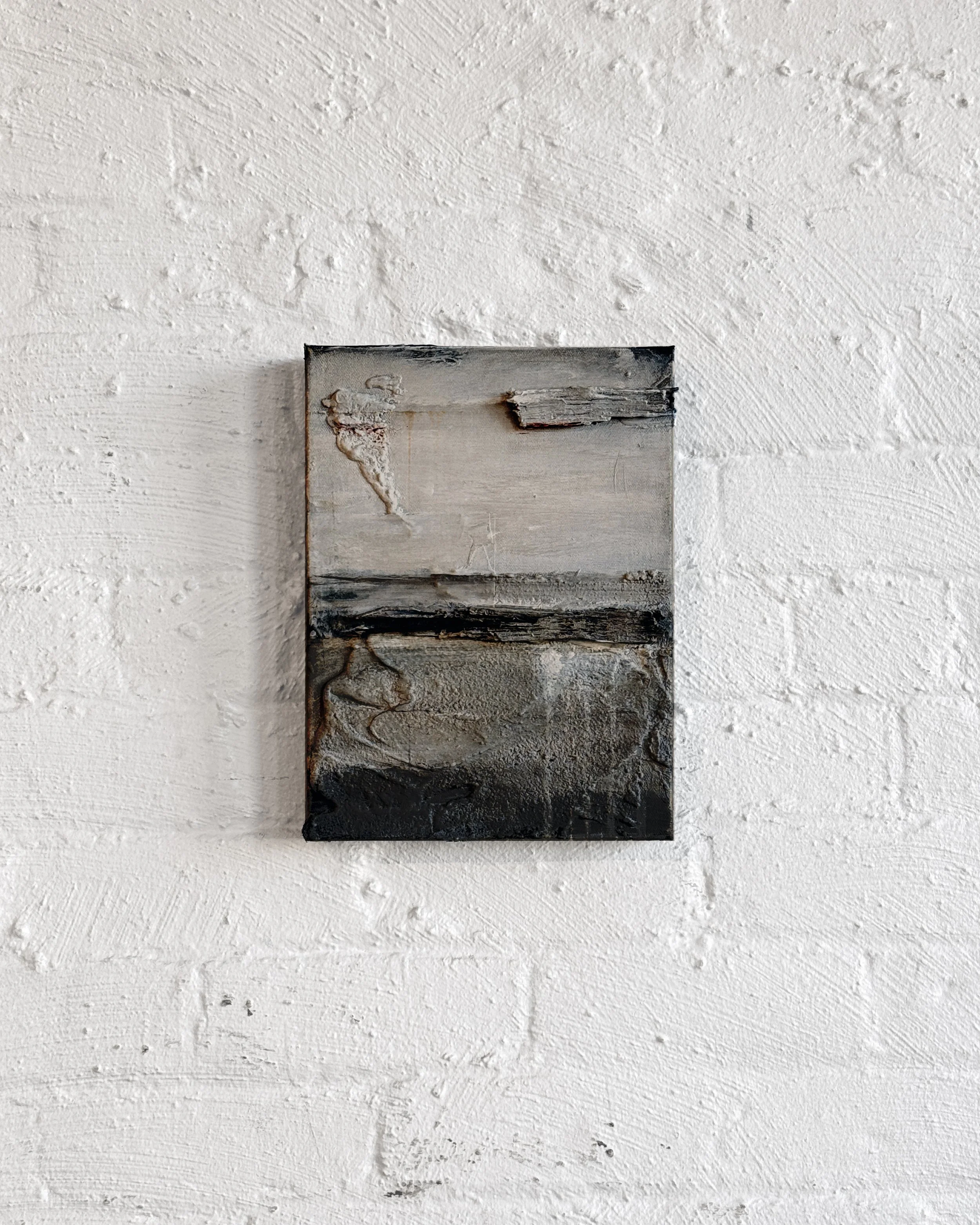
Winter I | Acrylic, medium, collage, cement, and driftwood on stretched canvas | 12 H x 9 W x 2 D in. | $750
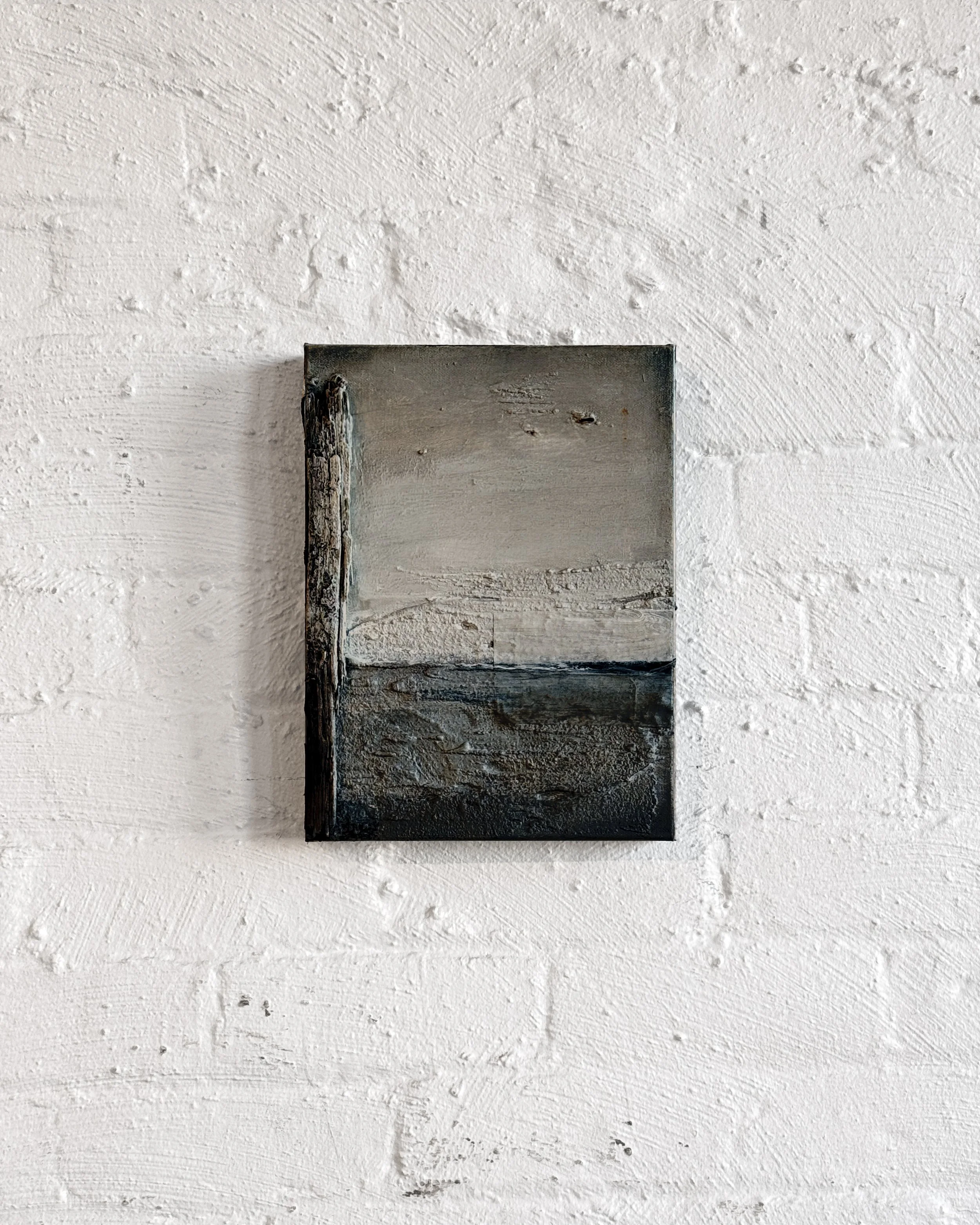
Winter II | Acrylic, medium, collage, cement, and driftwood on stretched canvas | 12 H x 9 W x 2 D in | $750
CHAPTER 8: THE SPRING
The gradual return of life to the dunes suggested a landscape beginning to reveal itself again after months of quiet. These works introduce emerging color, exposed textures, and recovered fragments as evidence of renewal rather than a complete return to what existed before.
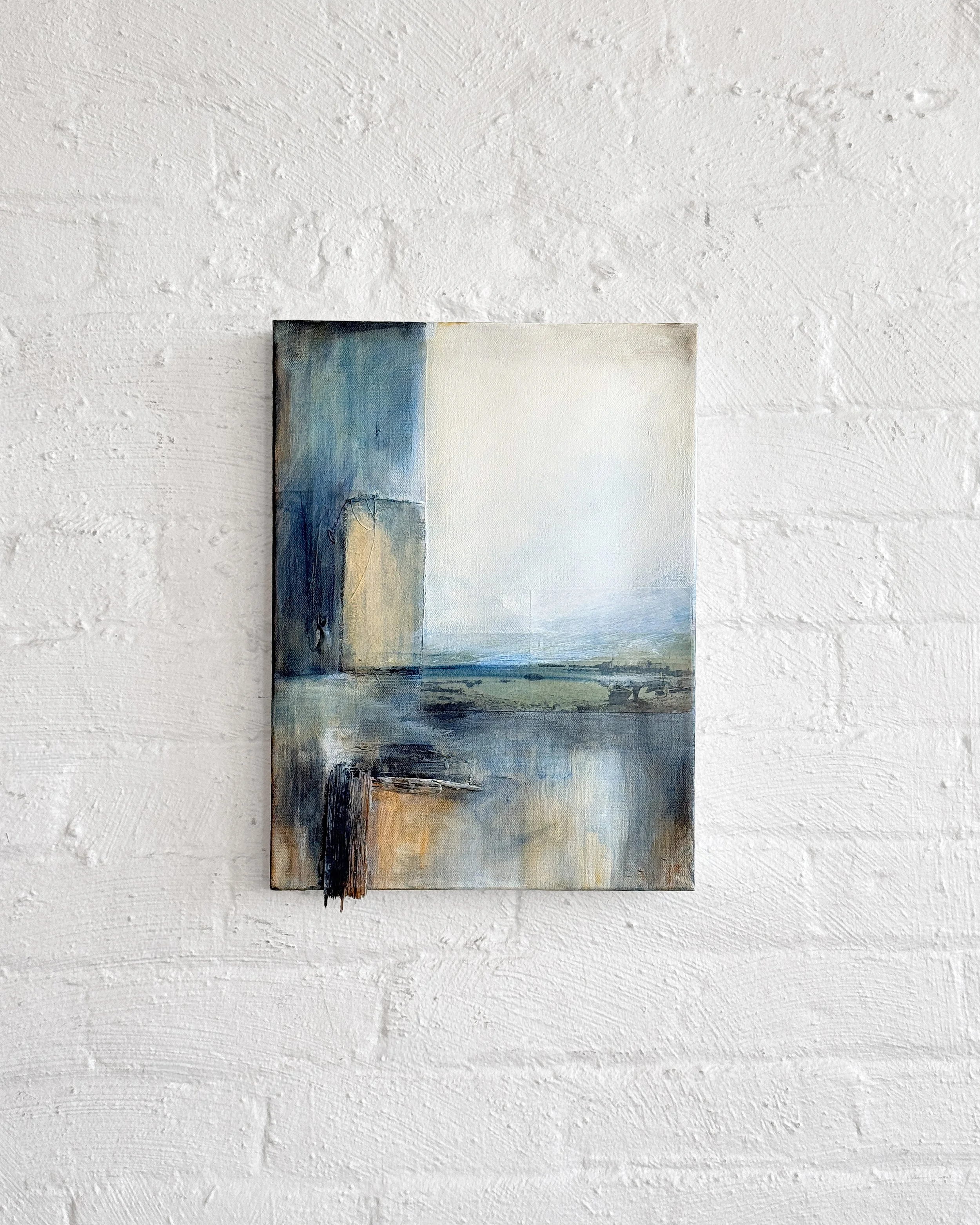
Spring I | Acrylic, medium, collage, linen, and driftwood on stretched canvas 16 H x 12 W x 2.5 D in. | $900
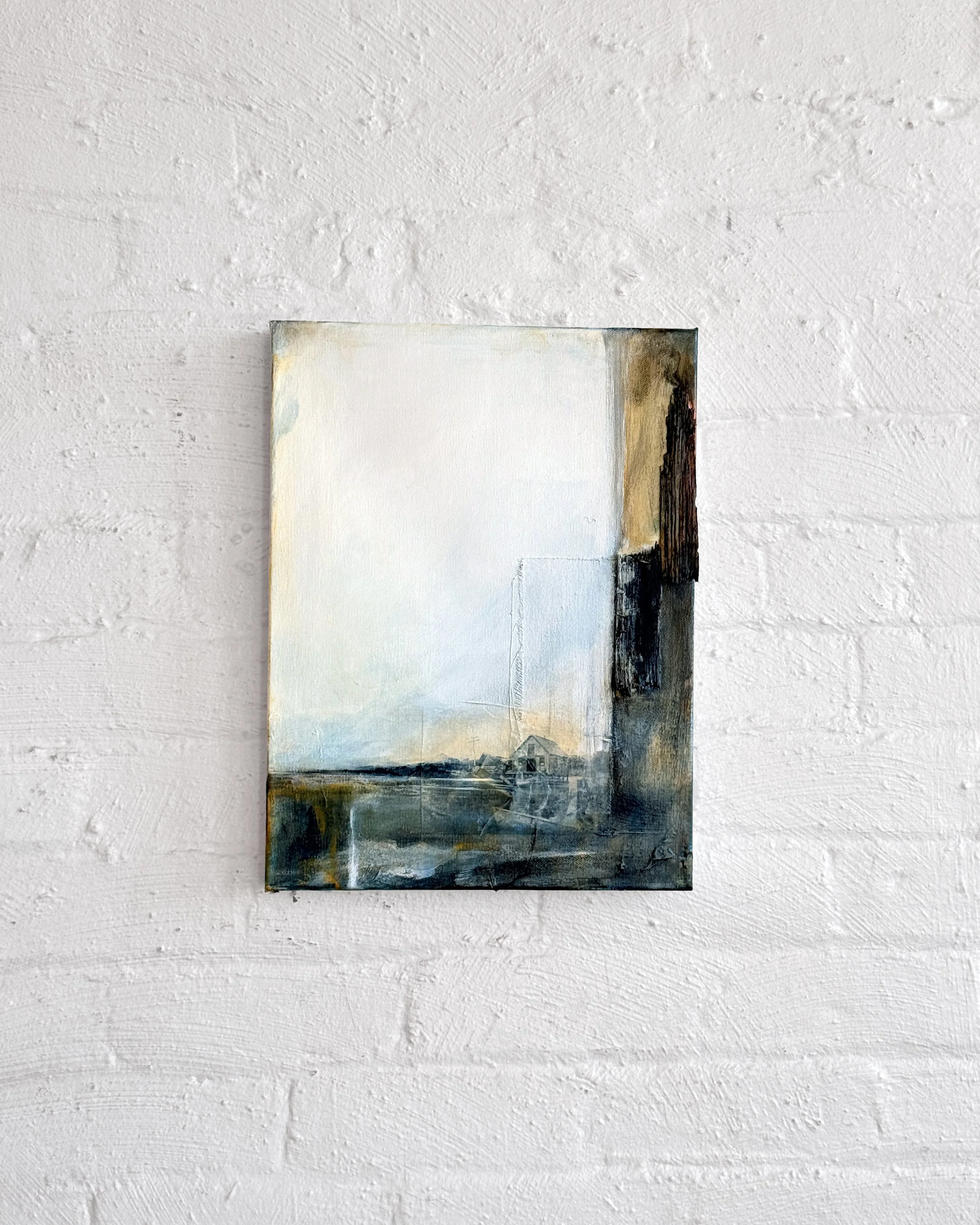
Spring II | Acrylic, medium, collage, linen, and driftwood on stretched canvas | 16 H x 12 W x 2.5 D in. | $900
CHAPTER 9: THE DEPARTURE
As Beston's time at the house draws to a close, I was drawn to the relationship between departure and the places we leave behind. These two works explore the fading presence of the observer through distant imagery, isolated remnants, and the quiet realization that the landscape continues without us.
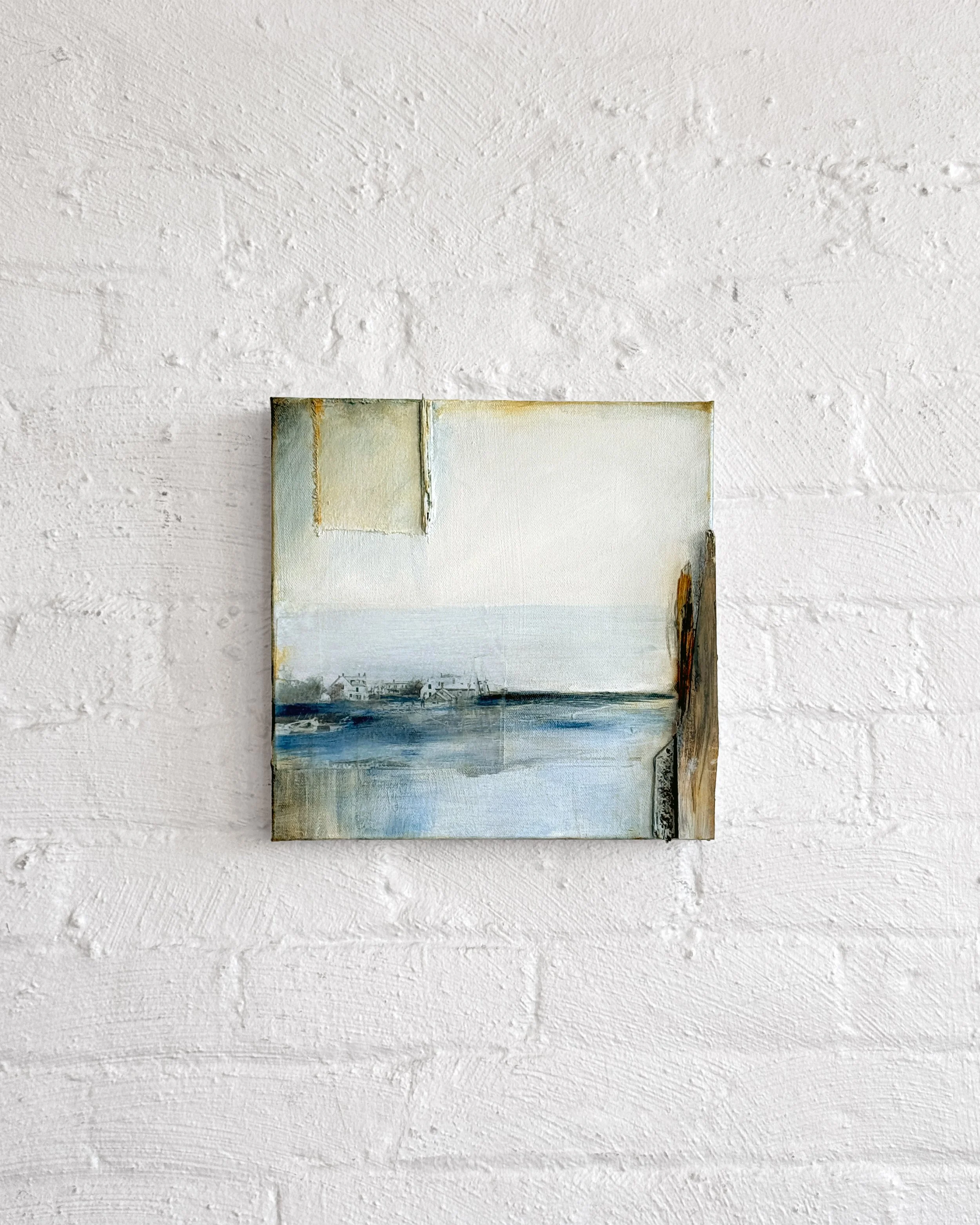
Departure I | Acrylic, medium, collage, and driftwood on stretched canvas | 12 H x 12 W x 3 D in. | $800
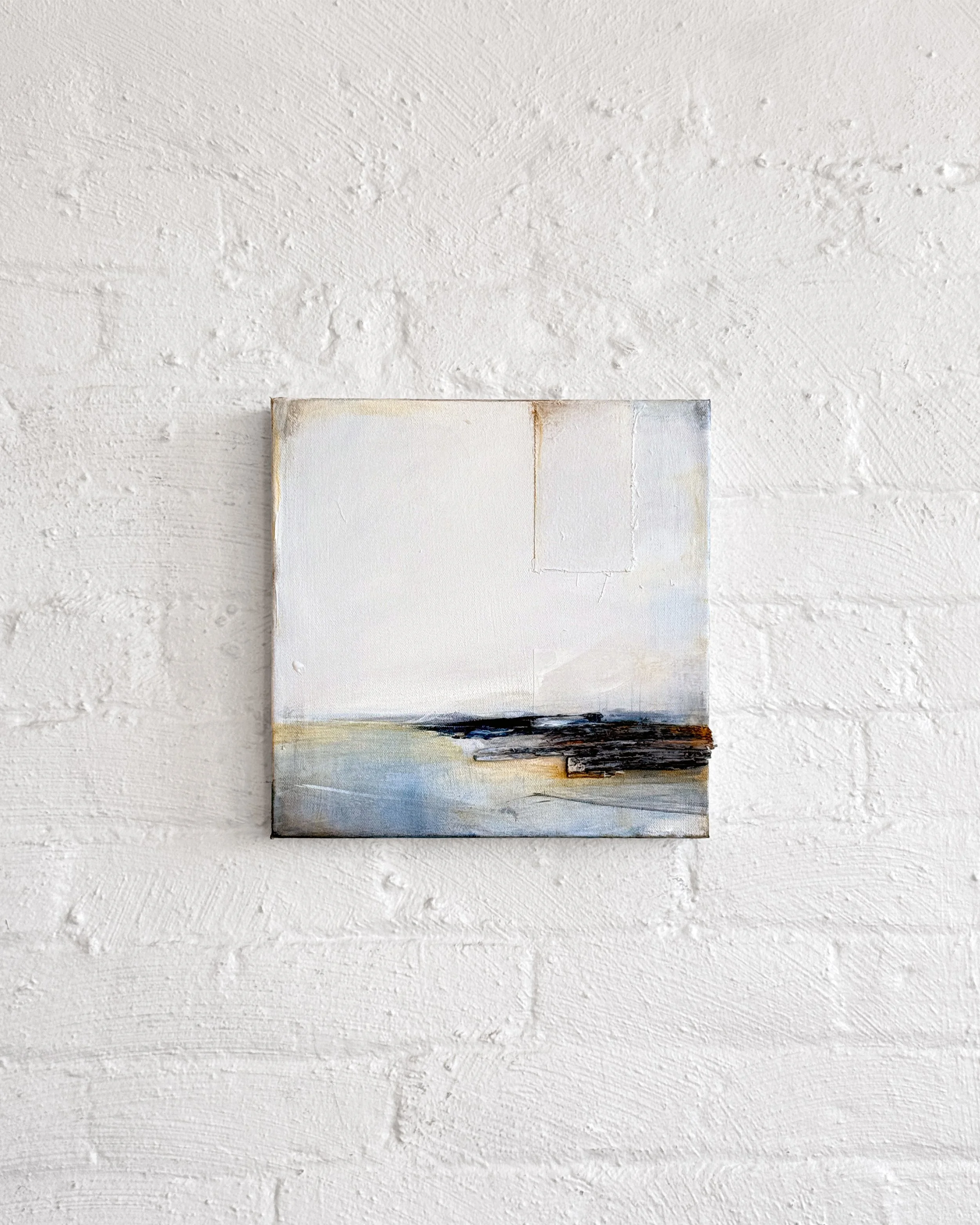
Departure II | Acrylic, medium, collage, and driftwood on stretched canvas | 12 H x 12 W x 3 D in. | $800
CHAPTER 10: THE AFTER
The conclusion of Beston's experience inspired me to consider what remains of a place after its human occupants have gone. Through fragmented structures, traces of former habitation, and open atmospheric space, these final works explore the landscape as an archive of what once existed.
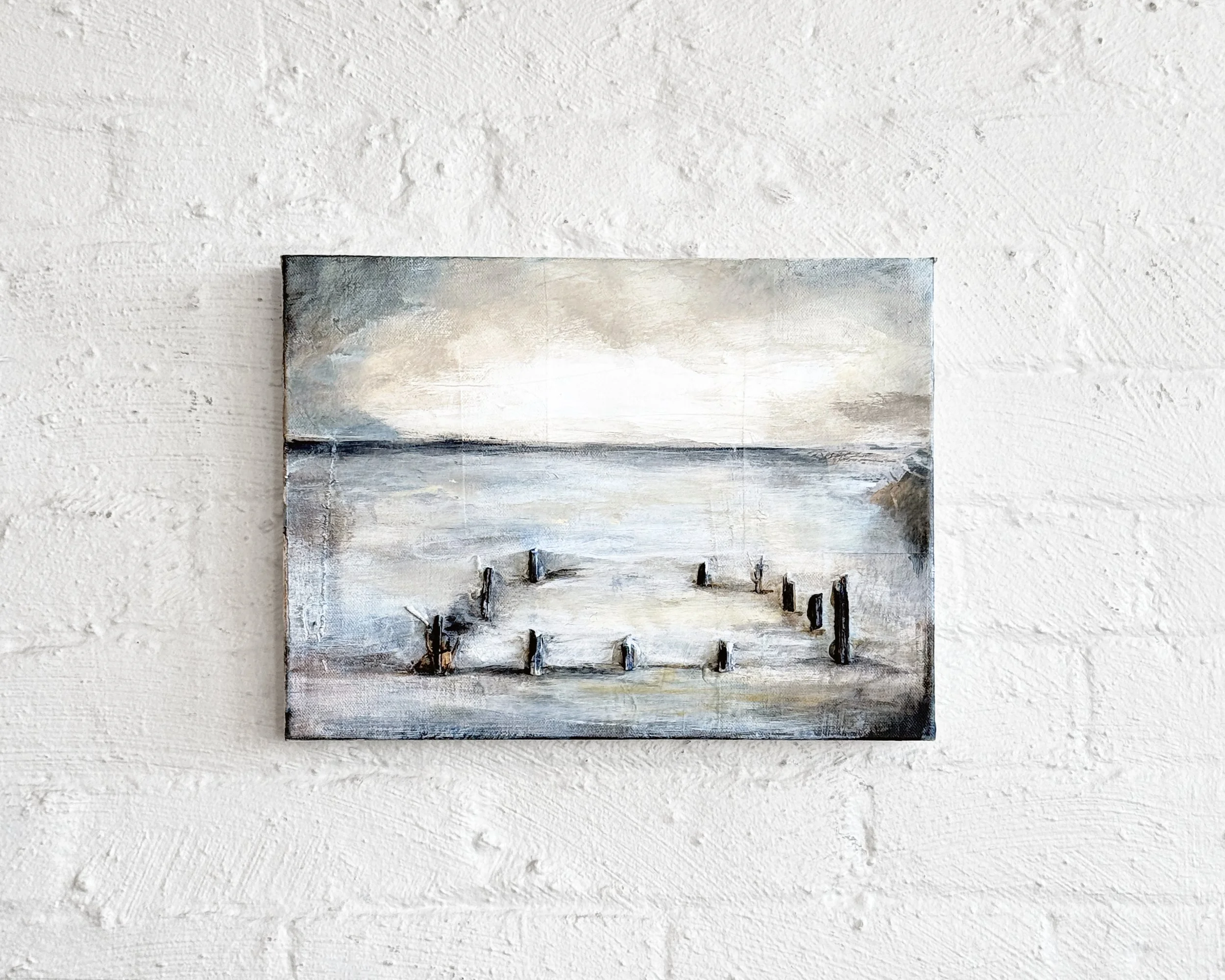
After I | Acrylic, medium, collage, fishing net, and driftwood on stretched canvas | 11 H x 14 W x 2 D in. | $900
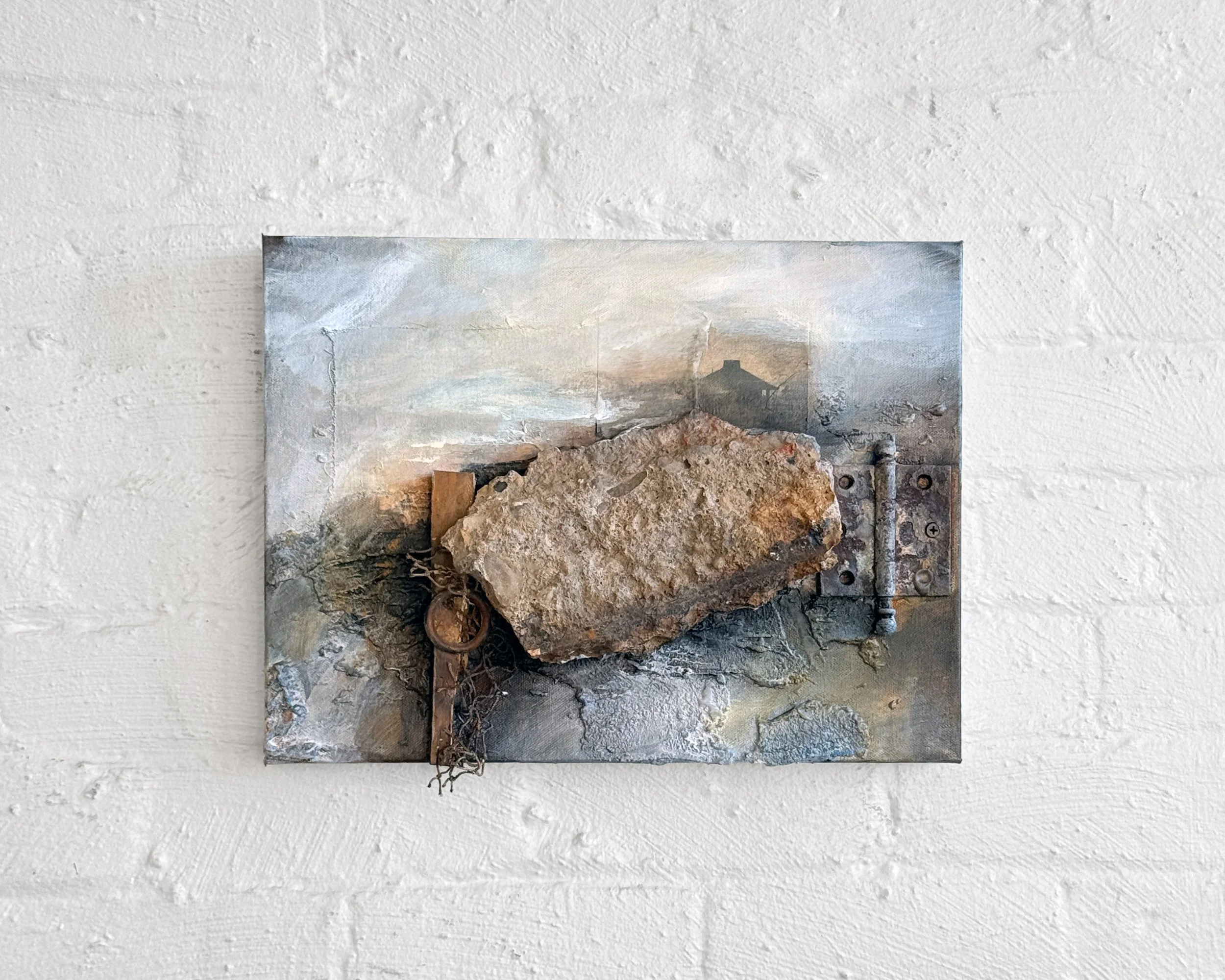
After II | Acrylic, medium, collage, concrete, found door hinge, metal, fishing net, and driftwood on stretched canvas | 12 H x 16 W x 4 D in. | $ $1000
Thank you for taking this journey with me. I hope these works offer something of what Beston found on the outer shores of Cape Cod: a deeper awareness of the natural world, our place within it and the quiet significance of what remains.
Cheers!
David Buetsche