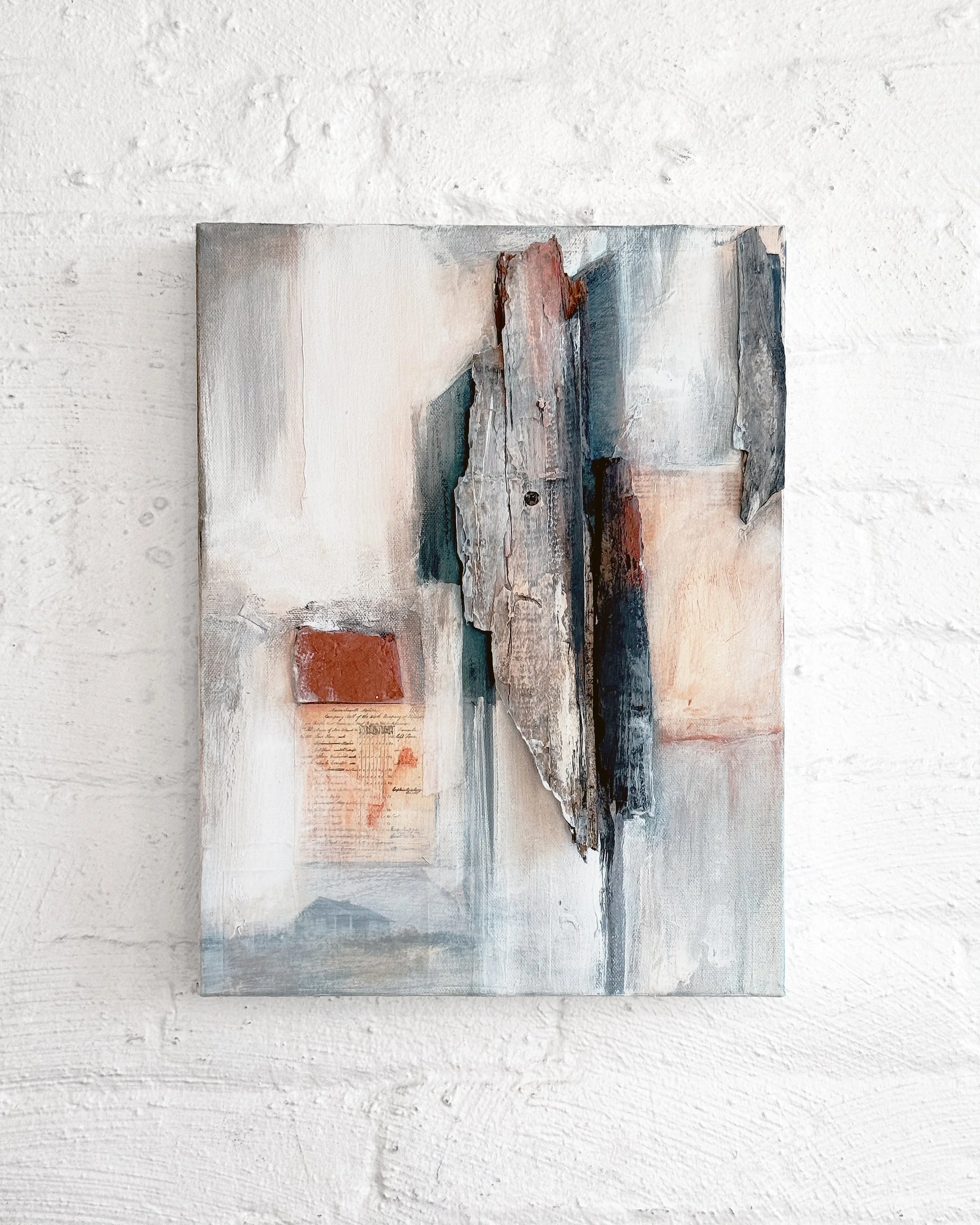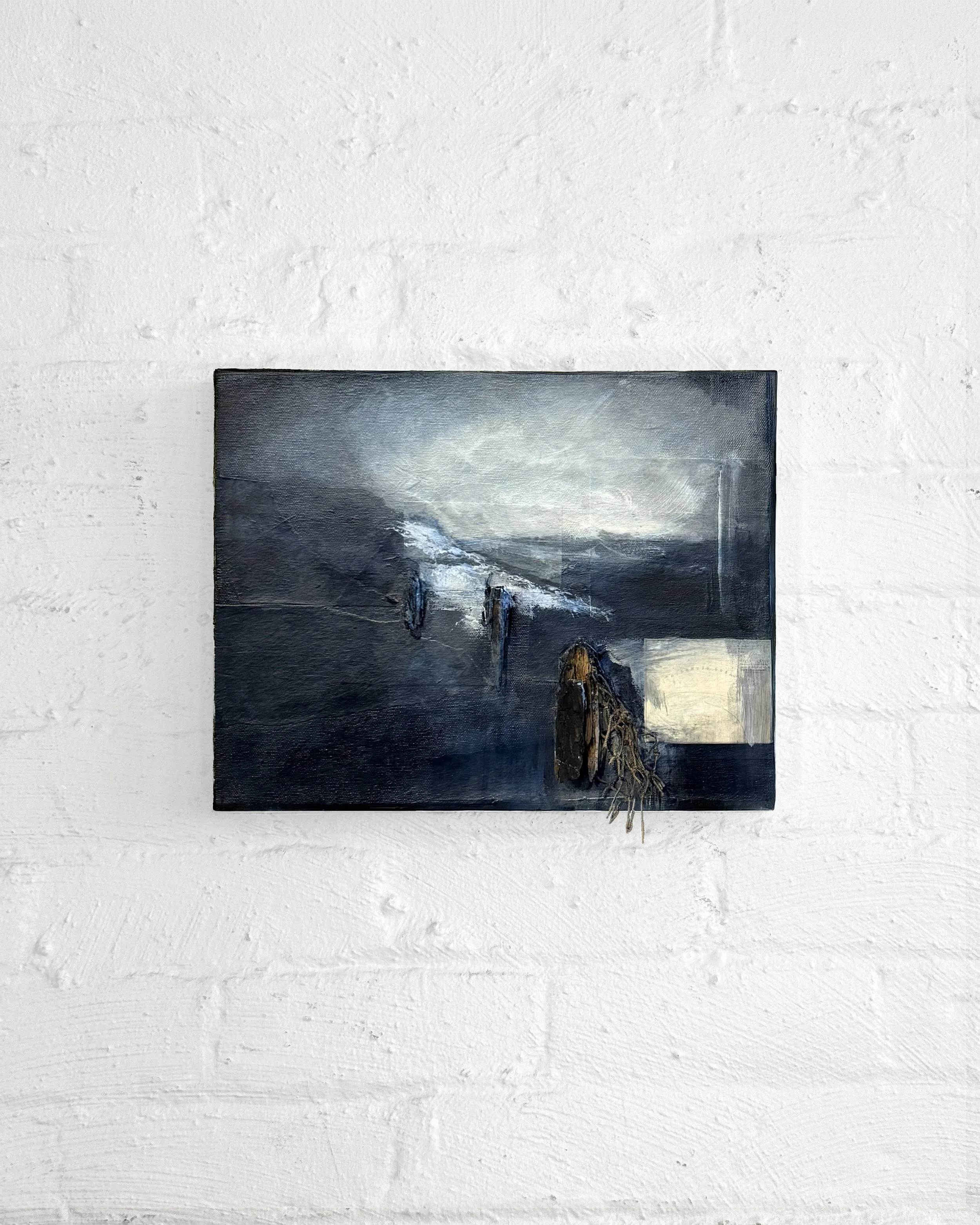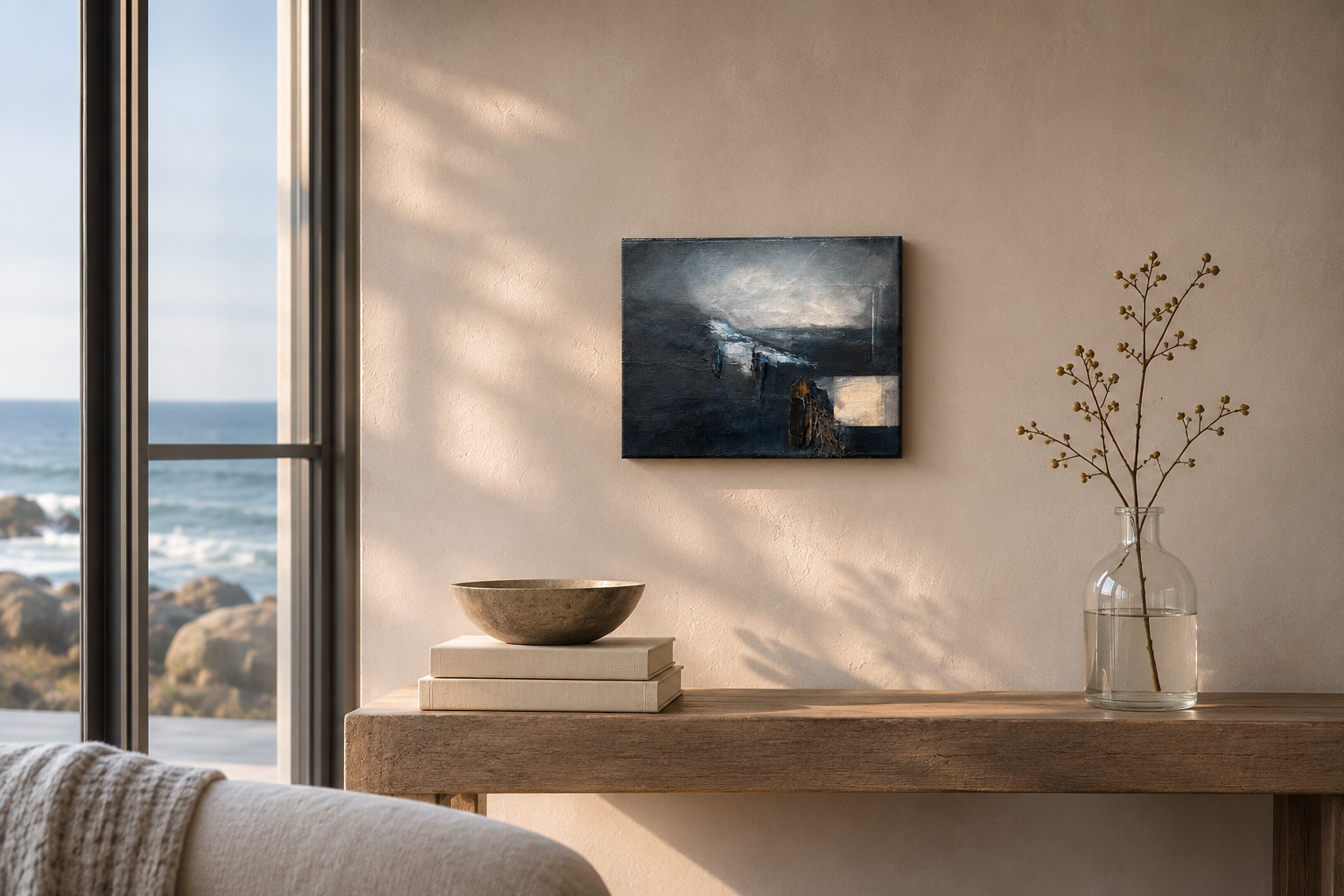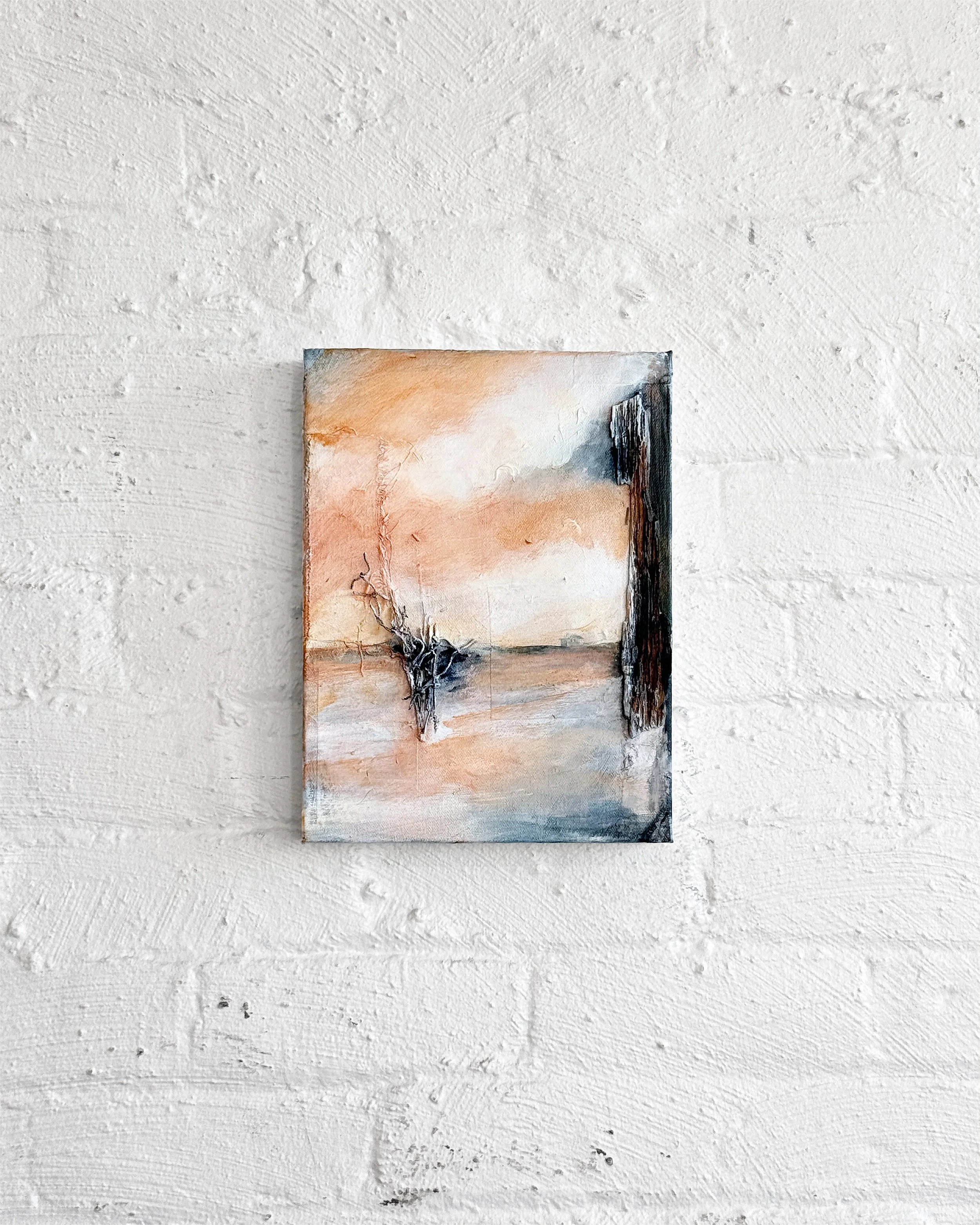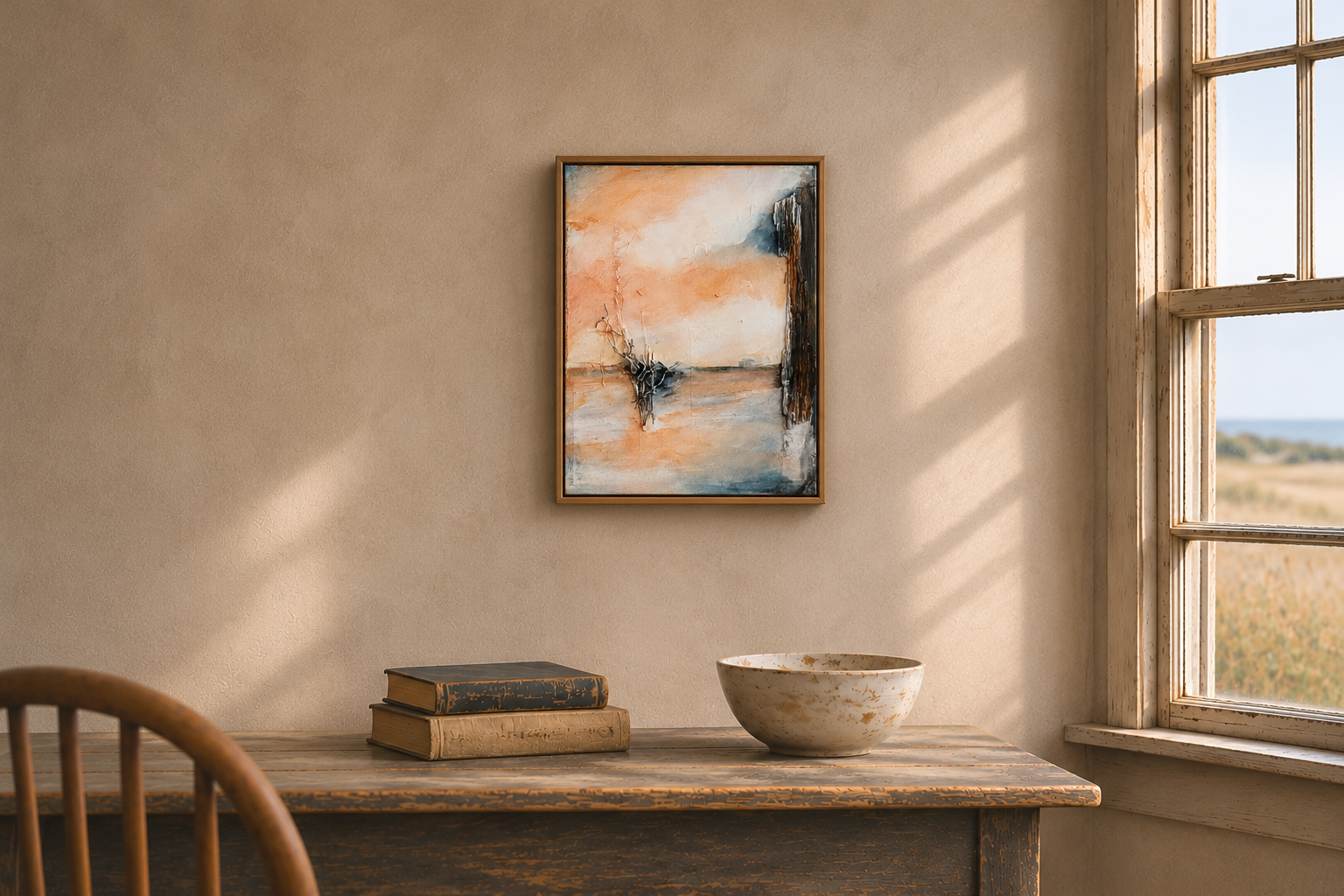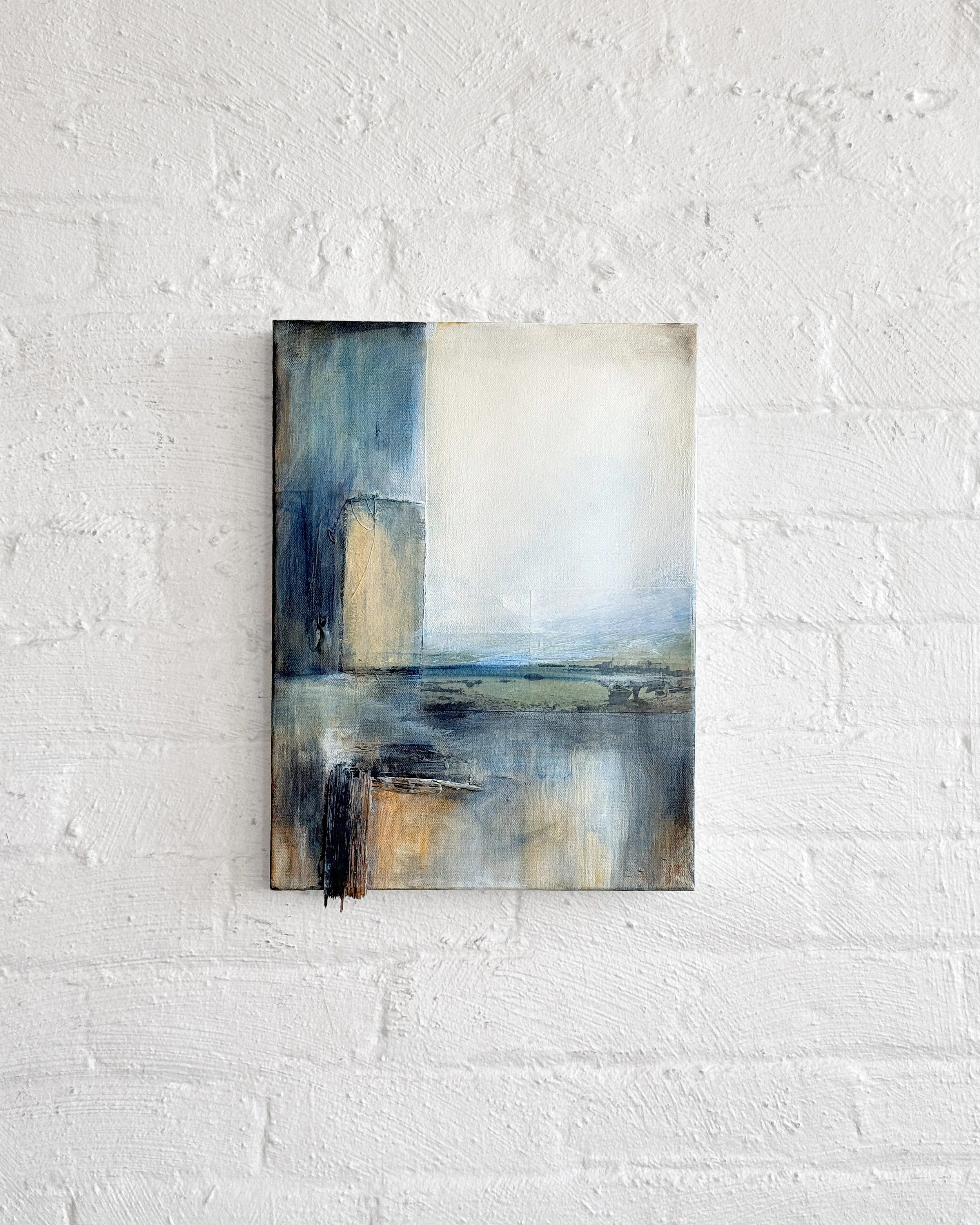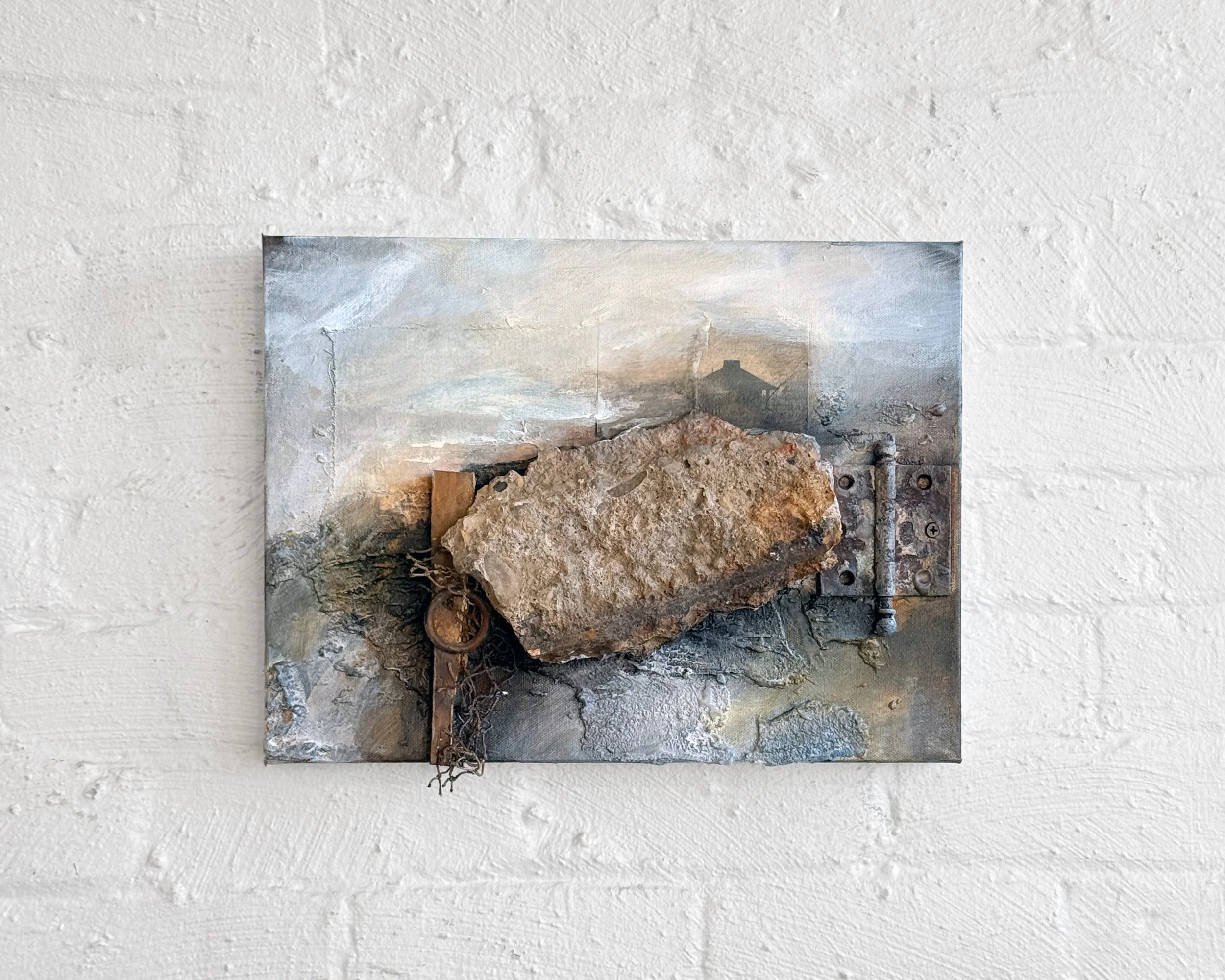
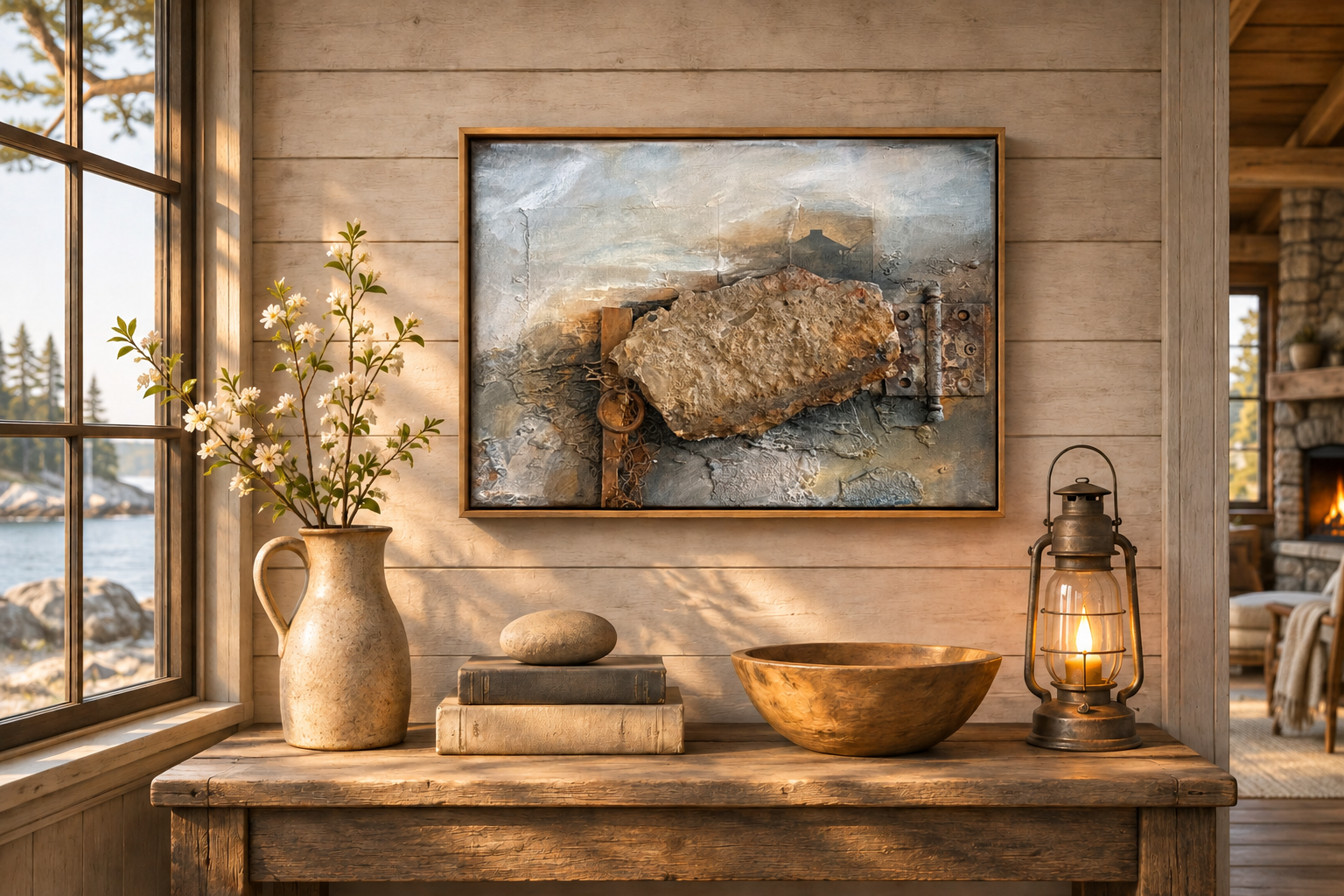
Acrylic, medium, collage, concrete, found door hinge, metal, fishing net, and driftwood on stretched canvas.
12 H x 16 W x 4 D in
2026
Original mixed-media artwork on stretched canvas with finished edges.
Signed and dated. Ready to hang.
Ships directly from the studio.
Description:
After II, the twentieth and final work in The Outermost House series, considers what remains when a place has physically disappeared. Following the destruction of Beston's cottage during the Blizzard of 1978, fragments of the structure, including pieces of its furnishings and landmark plaque, were recovered along the shore and preserved as connections to its history. A fractured, stone-like form rests against a weathered surface, accompanied by remnants of metal and material that suggest objects separated from their original purpose. These fragments become something more than evidence of destruction. They are reminders that a place can continue to exist through the objects, stories, and memories it leaves behind. The work closes the collection with the understanding that disappearance is not necessarily an ending, and that what survives may carry a significance far greater than its physical form.